Select Page

Get a Free Second Opinion

Pacemaker Surgery Cost in India

  • – Providing 30+ years of world-class healthcare to diverse communities.
  • – 600+ specialists across 62 medical specialties providing expert care
  • – Advanced technology and procedures for top-quality patient care
  • – Minimally invasive procedures for faster recovery and comfort
  • – Advanced surgical suites and ICUs for critical care
Factors Affecting

All You Need To Know About Pacemaker Surgery

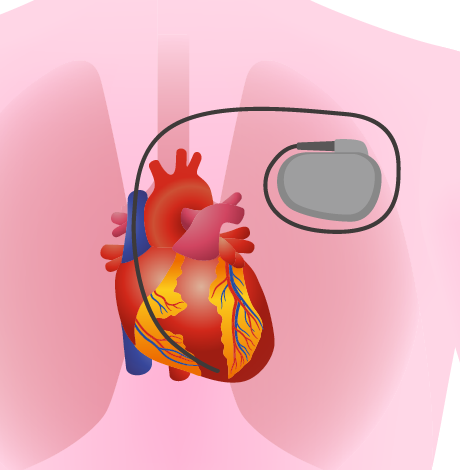
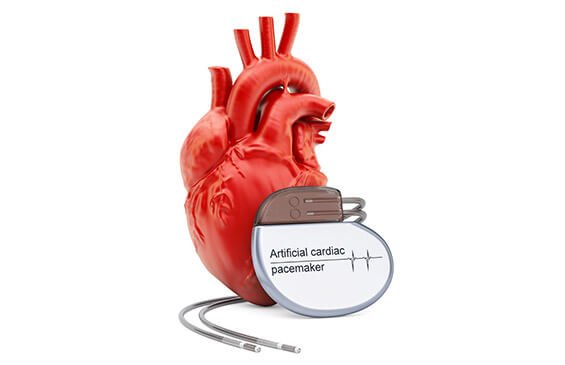
A pacemaker is a small implantable medical device that helps regulate the heart rhythm. It helps in managing conditions associated with the electrical system of the heart, when any part of the conduction system of the organ fails. Its major function is to ensure that the heart does not beat too fast or too slow, and beats at the right rhythm to avoid arrhythmias.
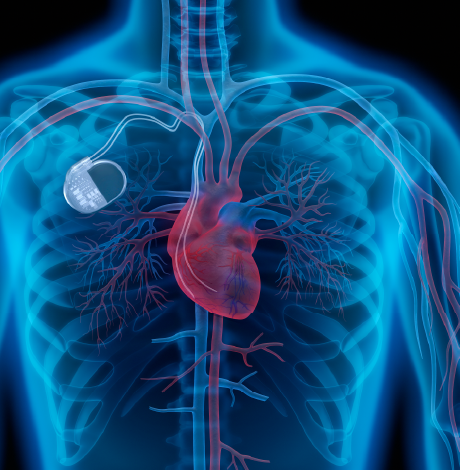
It is placed under the skin below the collar bone and connected to the heart chambers by lead wires running through a blood vessel. This surgery usually takes 1 to 2 hours.

How much does a Pacemaker Surgery cost in India?

Type Cost Range (INR)
Pacemaker Surgery in India (Average) ₹2,75,000 – ₹3,00,000
Pacemaker Device Cost ₹45,000 – ₹1,50,000
Pacemaker Surgery in Hyderabad Starts from ₹52,200

We understand that every patient’s needs are unique. For a precise Pacemaker Surgery cost estimate, call us at +918065906165

Who needs a Pacemaker?

  • Individuals with weak heart  or heart failure
  • Individuals with heart blockage
  • Individuals with a history of sudden cardiac arrest or any other life-threatening arrhythmias.
  • Effective in preventing post-transplant arrhythmias (irregular heartbeats) in individuals who have undergone heart transplants.
  • Individuals with genetic heart conditions such as Long QT syndrome.

Types Of Pacemaker Surgery

Single Chamber Pacemaker Implantation: It involves only one lead wire which connects the Pulse Generator to one chamber of the heart. It is mostly used for patients who require pacing support for their right ventricle only.
Dual Chamber Pacemaker Implantation: In this surgery, two lead wires are used to connect the Pulse Generator to two heart chambers. It usually connects the right atrium and the right ventricle to Pulse Generator, which helps in coordinating the contraction of both these chambers. It also ensures that the contraction and relaxation of both chambers occur in the right rhythm.
It consists of the following parts:

  • Pulse Generator: It is the part of the system that is capable of analyzing information and responding appropriately by delivering output signals by continuously monitoring how the patient’s heart is working.
  • Lead Wires: They connect the Pulse Generator to the heart chambers.
  • Programmer: It is a computer that can communicate with the implanted Pulse Generator. It is used for testing, analyzing, and altering the mode of working of the Pulse Generator during and after the pacemaker implantation surgery.

Individuals who may require a Pacemaker implant are people suffering from:

  • Bradycardia: In this condition, the heart rate is lower than 60 bpm.
  • Heart Block: This is the condition in which the electrical signal of the heart is disrupted.
  • Congenital Heart Diseases
  • Damages to SA node due to aging or heart disease
  • Long QT Syndrome

To diagnose if a patient requires a pacemaker implant, certain diagnostic assessments are carried out such as ECG, Holter & Event Monitors, Echocardiography, Electrophysiology Study, and Stress Test. Depending on the symptoms and the functioning of the patient’s heart, the doctor decides which type of pacemaker would be best to support their heart. Some patients may require pacemaker support only for one chamber of their heart, whereas some others may need support for multiple chambers of their heart.

Factors Affecting
Factors Affecting

Post Pacemaker Surgery

  • Following the one-week check-up, you can take a shower, wash the incision area with soap and water, and pat it dry. 
  • Do not strain your arm by doing any tasks such as heavy lifting or other strenuous activities.
  • Avoid soaking or submerging in tubs or pools for six weeks.
  • If you are given an antibiotic prescription at the time of discharge, please take the entire medication until it is finished.
  • Do not raise your arm above your shoulder for about four to six weeks on the side of your body where the pacemaker was inserted.
  • If you are consulting for any further treatment, like dental issues or others, inform your physician about your pacemaker 
  • Follow up for monitoring any complications, infection signs, or device failure issues.

Factors Affecting the Cost Of Pacemaker Surgery

The cost variation depends on the following factors:

  • Type of condition and relating surgery
  • Medications administered
  • Doctor’s fee
  • Cost and type of the implant device
Factors Affecting

Benefits of Pacemaker Surgery

  • Restores heart health
  • Improves symptoms such as palpitations and chest discomfort.
  • It minimizes the probability of heart failure.
  • Improved quality of life.

Why Choose Yashoda Hospitals

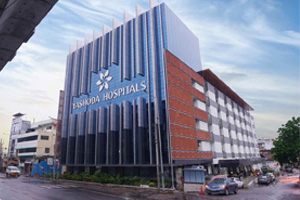
Yashoda Hospitals is committed to providing world-class treatment for patients from across the globe. With the unique combination of state-of-the-art technology, intuitive care, and clinical excellence, we are the healthcare destination for thousands of international patients in India.

blank
Comprehensive Care

On the journey to good health, we understand that it is important for you to feel at home. We plan out all aspects of your trip.

blank
Expert Doctors

Experienced specialists perform non-invasive and minimally invasive surgeries to provide the best treatment for international patients.

blank
Cutting-Edge Technology

Our hospitals are equipped with advanced technology to perform a wide range of procedures and treatments.


blank
Clinical Excellence

We deliver excellence by delivering quick and efficient healthcare and through pioneering research that helps all our future.patients.

All major insurance are accepted for
Pacemaker Surgery Treatment


Our Locations

  • Malakpet Location

    Malakpet

  • Somajiguda Location

    Somajiguda

  • Secunderabad Location

    Secunderabad

  • Hitec City Location

    Hitec City

FAQ's

A pacemaker is a small device implanted under the skin to regulate heart rhythm and rate. It helps synchronize the heart’s chambers, improving blood pumping. Pacemakers are used to treat heart failure, slow heart rates, and arrhythmias that cause irregular heartbeats.

In India, a temporary pacemaker typically costs between Rs. 50,000 and Rs. 55,000, with variations depending on the hospital, medical team, and patient specifics.

Pacemaker surgeries come in two types: dual chamber and single chamber. A dual chamber pacemaker uses two lead wires to connect the pulse generator to both the right atrium and right ventricle, while a single chamber pacemaker uses one lead wire to connect the pulse generator to a single heart chamber, typically the right ventricle.

The average cost of a Micra pacemaker in India is around ₹14 lakh. However, prices can vary based on factors like the complexity of the procedure, reimbursement levels, development costs, competition, product life cycle, manufacturer policies, and the location of sale.

Pacemaker implantation carries risks, including complications during insertion such as pneumothorax, wound infection, lead dislodgment, and hematoma. Post-procedure risks include allergic reactions, blood clots, device issues, heart problems, infection, pacemaker syndrome, tissue scarring, and trapped fluid or air.

Pacemaker batteries typically last 6–10 years, though this can vary based on the model and usage. Some pacemakers can last up to 15 years.

Terms and conditions

All the cost and surgery information provided on the website is primarily to enable the users to obtain a better understanding of Yashoda Hospitals and the medical services provided by it, and the information thereby provided is subject to changes and modifications as and when required without any prior notice. Actual cost of the surgery details would be confirmed at the hospital after doctor consultation only.

Yashoda Hospitals does not represent or endorse the accuracy, completeness or reliability of any information displayed, uploaded or distributed through the website. The usage of the content implies that you acknowledge that any reliance upon any such statement or information shall be at your own risk. Yashoda Hospitals does not resume any responsibility related to the accuracy of information provided or made available. None of the individual developers, system operators, third-party contributors and management of Yashoda Hospitals or anyone else connected to Yashoda Hospitals can be held responsible for the results or consequences incurred due to any reliance being placed or adopt any of the information presented on this website.

Book an appointment
in 2 minutes