


Living Light—Intermittent Fasting For Energy, Balance, and Heart Health
1. Methods to follow for Intermittent Fasting
3. Practice Fasting with Discipline
4. Intermittent Fasting for Good Heart Health
5. How to Begin Intermittent Fasting?
6. Maximizing the benefits of Intermittent Fasting
7. Who should not practice Intermittent Fasting
Intermittent fasting, otherwise known as IF, is a guide to eating where you switch between eating periods and fasting periods. Intermittent fasting is different from a diet because a diet tells you what to eat, whereas intermittent fasting is about when you eat.
The practice of fasting is an age-old phenomenon followed by humans due to necessity or because of cultural and religious occasions. But scientific studies, in modern times, have also highlighted the importance of fasting in the maintenance of a healthy body, especially “heart health.”
The correct methods to follow for Intermittent Fasting
You can follow several different versions of intermittent fasting, depending on your personal choice and objectives.
Below is the list of the most common intermittent fasting routines followed:
| Type of Intermittent Fasting | Time of Fasting | Eating Hours | Advantages | Level of Difficulty |
|---|---|---|---|---|
| 16/8 Method | 16 Hours | 8 Hours | Usually followed by people who start Intermittent fasting, which helps in weight loss | Easy |
| 5:2 Method | For 2 days of the week, eat only 500–800 calories | For the remaining 5 days of the week, eat normally | Helps in losing fat, and the easy breakdown of food into energy | Moderate |
| Alternate-day fasting method | 24 hours of fasting every other day | Normal eating the next day | As per scientific studies, this technique is useful in advanced weight loss | Hard |
| Eat-Stop-Eat method | 1 or 2 days of weekly fasting for 24 hours | For the remaining 5 or 6 days, eat normally | Helps in repairing cells in the body and controlling body weight | Moderate / Hard |
| Warrior Diet Method | 20 hours of light snacks intake | 4 hours, one big meal | For people who like to have one big meal per day | Moderate |
| One meal a day method | 20–23 hours | 1–4 hours | Rapid fat loss and minimal eating | Hard |
The 16/8 method is the one that is most popular and worthwhile for people who have just begun the practice of intermittent fasting.
The timetable for fasting to get maximum benefits
The favorable result due to intermittent fasting depends on the timetable that suits you the most.
The most common timings that are followed for intermittent fasting are
| Schedule | Eating times | Fasting times | Actual Time |
|---|---|---|---|
| The 16/8 Method is the most popular | 8 hours | 16 hours | 12 PM to 8 PM eating; 8 PM to 12 PM fasting |
| Early eating window | 8 hours | 16 hours | 8 AM to 4 PM eating; 4 PM to 8 AM fasting |
| One meal a day window | 1–2 hours | 22–23 hours | One meal at 6 PM |
| 5/2 method | Normal eating for 5 days of the week | 500–600 calories for 2 days | Any 2 days of the week, according to your choice |
According to an expert dietitian, eating meals during the daytime is most beneficial for intermittent fasting and improved food digestion. Additionally, sufficient energy is required for better outcomes.
Practice Fasting with Discipline for Maximum Advantages
As described, discipline is one of the key factors in determining the clear advantages of intermittent fasting on your health.
| Advantage | Its method of working | Result on Overall Health |
|---|---|---|
| Healthy loss of weight and Fat burning | Lowers insulin and helps in the breakdown of fats | Balanced loss of weight, reduces body fat |
| Increase in insulin sensitivity | Increase glucose regulation | Decreases the risk of type 2 diabetes |
| Heart health | Helps in lowering cholesterol, blood pressure, and inflammation | Decreases the risk of heart-related issues |
| Reduced inflammation | Less C-reactive protein and oxidative stress | Helps in avoiding chronic (long-term) diseases |
| Cellular repair (Autophagy) | Recycles damaged cells | Anti-ageing, long, healthy life |
| Brain health | Helps in increasing the levels of Brain-Derived Neurotrophic Factor | Increased memory, helps in learning and maintains focus |
| Simple eating habits | No need to keep a track of calorie intake | Easier long-term, habit-forming eating procedure |
Intermittent Fasting is the way to good Heart Health
A significant relation has been found between intermittent fasting and avoiding heart issues.
Let’s now discuss the effects of Intermittent fasting on overall heart health :
| Conditions that can develop or lead to a Heart problem | Effect of Intermittent Fasting |
|---|---|
| High Blood Pressure | Fasting helps in the reduction of both systolic and diastolic blood pressure. |
| High levels of low-density lipoprotein cholesterol | Fasting helps reduce the level of Low-density lipoprotein cholesterol and triglycerides. |
| Obesity | Helps in weight loss |
| Insulin resistance | Increases the sensitivity to insulin and reduces the risk of diabetes |
| Inflammation | Helps in the reduction of factors responsible for inflammation, like C-reactive proteins. |
Intermittent fasting helps in reducing the need to measure calorie intake at regular intervals and prevents heart disease-causing factors.
How to Begin Intermittent Fasting?
Intermittent fasting is not tough to start. Following some routines listed below can help you gain significant benefits.
- Selection of fasting method: Most Beginners start Intermittent fasting by following the 16/8 method.
- Stay hydrated: Drink water at regular intervals. Black Coffee and Tea can also help in reducing hunger.
- Select highly nutritious food: Include Proteins, Whole grains, Fruits, Vegetables, and Healthy fats.
- Begin gradually: Start with 12-hour intermittent fasting and then gradually increase the duration as you start to feel comfortable.
- Avoid overeating when it’s time to eat: Intermittent fasting is not a licence to start eating anything you like on a binge during the eating window.
- Combine with light exercise: Intermittent fasting, when paired with little exercises and strength training, can have long-term benefits.
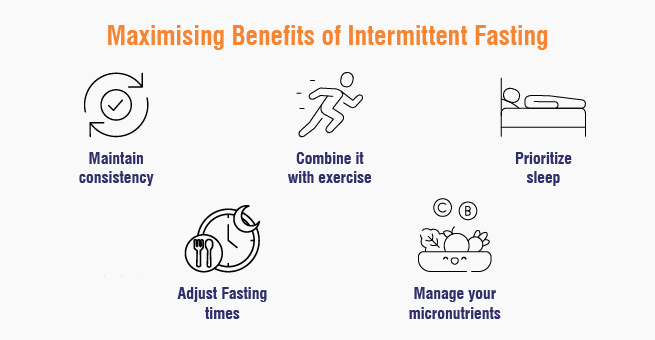
Expert’s advice on maximizing the benefits of Intermittent Fasting
To take the full advantage of your intermittent fasting journey,
- Maintain consistency: Choose an intermittent fasting timetable that you can follow regularly without skipping.
- Combine it with exercise: The combination of light exercise in the fasting window has been found to quicken the process of fat burning.
- Prioritize sleep: Irregularities in sleeping increase the release of hormones that make you hungry, thereby making intermittent fasting tougher to practice.
- Adjust Fasting times: Practice intermittent fasting according to your comfort. If you cannot fast for breakfast, try for dinner and vice versa.
- Manage your micronutrients: Make sure your diet during the eating window includes necessary vitamins and minerals so you don’t go deficient on them.
People who should not practice Intermittent Fasting
Intermittent fasting is a practice that should not be followed by everyone. The individuals who are being mentioned should either consult a doctor before starting an Intermittent fasting schedule or completely avoid one :
- Patients with diabetes should avoid intermittent fasting due to the high risk of severe hypoglycemia, which is low blood sugar, especially in cases where the patient has taken insulin or certain diabetes medications.
- Pregnant and breastfeeding women should completely avoid Intermittent fasting.
- Patients with eating disorders like anorexia (People with less weight), Bulimia (the act of overeating and then self-induced vomiting or purging), and binge eating disorder.
- People who are required to take regular medications after or before having food.
Initial results have already suggested that intermittent fasting shows a positive outcome in preventive healthcare.
Intermittent Fasting in the Future
Research is being done by experts and scientists to include intermittent fasting as an option for therapy in:
- Prevention of chronic diseases like diabetes, heart problems, and cancer.
- Prevention of long-term brain problems such as Alzheimer’s and Parkinson’s disease.
- Maintenance of gut health by improving the digestion and immunity of individuals.
- To help people live a long, healthy life, intermittent fasting is found to be beneficial for anti-ageing and autophagy.
Initial results have already suggested that intermittent fasting shows a positive outcome in preventive healthcare.
When to Eat: Final Thoughts On Intermittent Fasting
Intermittent fasting is not just about skipping meals; it’s much more than that. Scientific evidence proves its everlasting effect in the maintenance of heart health, ease of digestion, distribution of energy in the body, and above all, weight loss.
Reducing the heart disease risk is one of the biggest advantages to date of this method, along with increased energy and focus.
Thus, by knowing more about the meaning of intermittent fasting, its different forms, and timetables, significant long-term health benefits can be observed, proving its value as an effective tool for the maintenance of good overall health, according to your comfort.
Have any questions or concerns about your health? We’re here to help! Call us at +918065906165 for expert advice and support.
FAQ’s
How to do intermittent fasting?
Intermittent fasting is not tough to start. Selection of a fasting method gradually, staying hydrated, selection of highly nutritious food, avoiding overeating when it is actually the time to eat, and combining it with light exercise can provide significant health benefits.
What to eat during intermittent fasting?
Include highly nutritious foods that include Proteins, Whole grains, Fruits, Vegetables, and healthy fats. Also, include all the essential micronutrients like vitamins and minerals so that you do not go deficient in them.
Does Intermittent fasting help in losing body fat faster?
Yes, Intermittent fasting helps in burning body fat by lowering insulin levels and facilitating the easy breakdown of fats, which are then converted into energy. Also, Intermittent fasting when combined with light exercise helps in healthy fat loss, by reducing the level of Low-density lipoprotein cholesterol and triglycerides.
Is intermittent fasting good ?
Yes, Intermittent fasting is good as it helps in Healthy weight loss and fat burning, maintenance of heart health, reduces inflammation, repairs cells, maintains brain health, and develops healthy eating habits for long-term health.
Can we drink water during Intermittent fasting?
Yes, it is important to stay hydrated during Intermittent fasting. Drink water at regular intervals. Black Coffee and Tea can also help in reducing hunger




 Appointment
 Second Opinion
 WhatsApp
 Call
Call More
More