Select Page

Ureteroscopy in Hyderabad

Ureteroscopy is a minimally invasive procedure used to diagnose and treat ureter and kidney problems, especially urinary stones. At Yashoda Hospitals, expert urologists use advanced endoscopic technology to remove stones, ensuring faster recovery and minimal discomfort.
Expert team of experienced urologists

  • Advanced minimally invasive endoscopic technology
  • High safety and infection control standards
  • Personalised treatment plans for every patient
  • Comprehensive care from diagnosis to recovery

Ureteroscopy summary

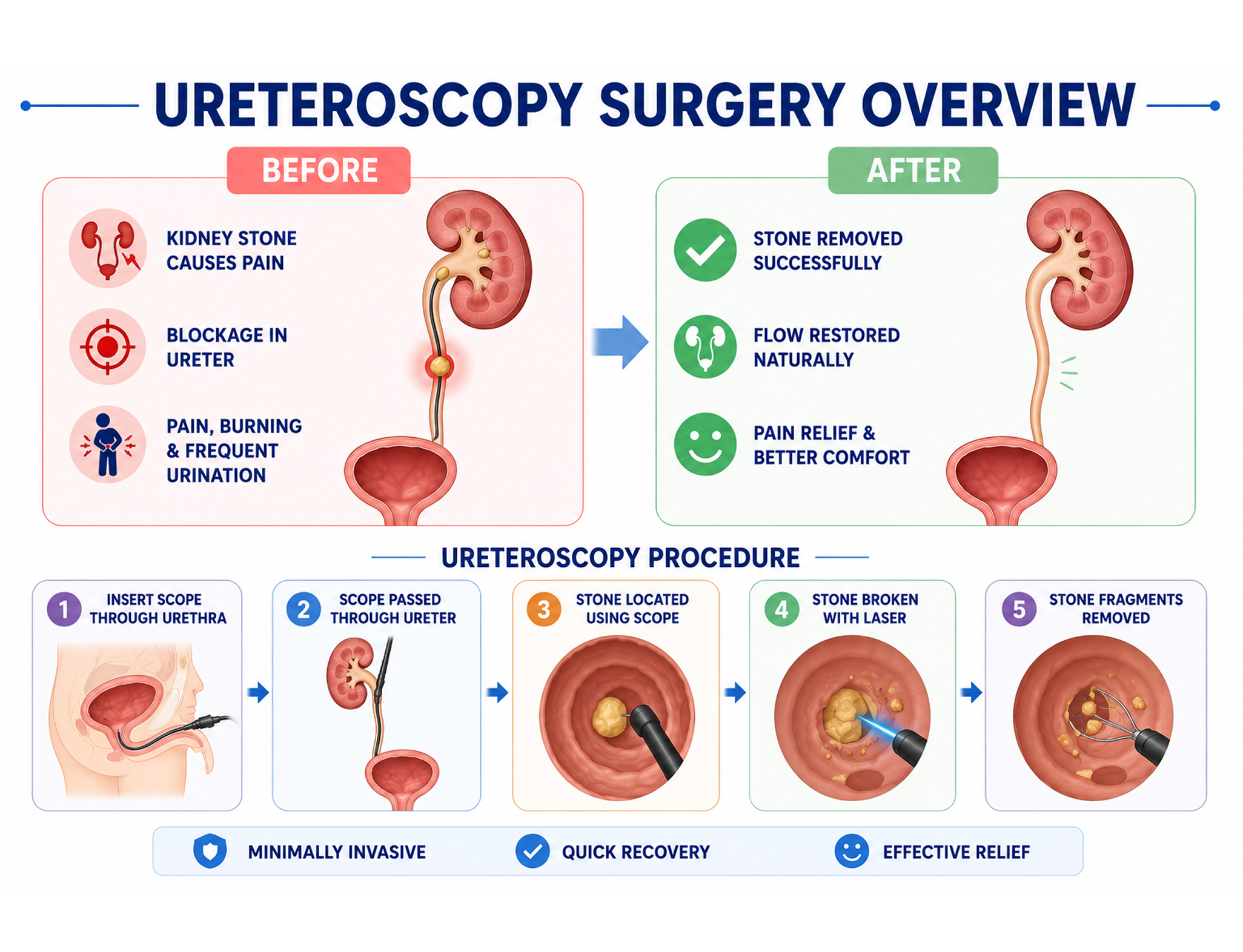
Ureteroscopy is a minimally invasive procedure used to diagnose and treat stones in the kidney or ureter. A thin instrument called a ureteroscope is passed through the urethra and bladder into the ureter to locate stones or blockages. If a stone is found, it can be removed or broken into smaller pieces using laser technology. The procedure usually takes 30-60 minutes and is performed as a day-care treatment under general or spinal anesthesia. Patients may experience mild burning during urination temporarily, but can typically return to normal activities within a few days. When performed by experienced urologists, ureteroscopy is a safe and effective treatment for urinary tract stones.

What is Ureteroscopy?

Ureteroscopy is a minimally invasive urological procedure used to examine and treat problems in the ureter and kidney, most commonly ureteric or kidney stones. In this procedure, a thin, tube-like instrument called a ureteroscope is gently passed through the urethra and bladder into the ureter, allowing the urologist to directly view the urinary tract. If a stone or blockage is found, specialised instruments or laser technology can be used to break the stone into smaller fragments or remove it safely. Since the procedure does not require any external incisions, it usually results in less pain, shorter hospital stays, and quicker recovery. Ureteroscopy is widely used as an effective and reliable treatment for urinary stones and other ureteral conditions.

Types of Ureteroscopy:

Ureteroscopy procedures are mainly classified based on the type of ureteroscope used and the area of the urinary tract being treated. The following are the common types of ureteroscopy:

  • Rigid Ureteroscopy: Rigid ureteroscopy uses a straight, firm ureteroscope that allows the urologist to easily access the lower ureter near the bladder and is commonly used to treat stones stuck in this area. The rigid instrument provides clear vision and stability, allowing the surgeon to remove stones using small baskets or forceps. In some cases, laser energy may also be used to break larger stones into smaller fragments that can be removed or passed naturally through urine.
  • Semi-Rigid Ureteroscopy: Semi-rigid ureteroscopy uses a slightly flexible instrument that offers better maneuverability compared to a rigid ureteroscope. It is typically used to treat stones located in the middle section of the ureter. Semi-rigid ureteroscopy is commonly used for both diagnostic evaluation and stone removal, and it often provides a good balance between stability and flexibility during the procedure.
  • Flexible Ureteroscopy (Retrograde Intrarenal Surgery – RIRS): Flexible ureteroscopy uses a highly flexible ureteroscope that can easily navigate the urinary tract to reach the upper ureter and inner parts of the kidney that rigid instruments cannot access. It is commonly used to treat kidney stones in the renal pelvis or calyces using laser lithotripsy, which breaks stones into tiny fragments that can pass naturally or be removed with specialised instruments. This technique is also a key part of Retrograde Intrarenal Surgery (RIRS).
    Each type of ureteroscopy is selected depending on the location, size, and complexity of the stone or urinary tract condition, ensuring effective treatment and faster recovery for the patient.

How Is Ureteroscopy Performed?Before, During and After.

Proper care before, during, and after ureteroscopy helps ensure a safe procedure and smooth recovery. Following medical guidance at each stage reduces complications and improves treatment outcomes.

Pre-operative Care

Before undergoing a ureteroscopy, patients are carefully evaluated to ensure the procedure is safe and effective. Doctors may recommend diagnostic tests such as blood tests, urine tests, an ultrasound, or CT scans to identify the size and location of kidney or ureteral stones. Patients are usually advised to avoid food and drinks for several hours before surgery and to inform their doctor about any medications they are taking, especially blood thinners or medications for chronic conditions. In some cases, preventive antibiotics may be given to reduce the risk of infection.

Intra-operative Care

Ureteroscopy is typically performed under general or spinal anaesthesia to keep the patient comfortable throughout the procedure. A thin, specialised instrument called a ureteroscope is inserted through the urethra, passed into the bladder, and guided into the ureter. The device has a small camera and light that allows the surgeon to clearly view the urinary tract. If kidney or ureteral stones are detected, they may be removed using tiny instruments or broken into smaller fragments with laser technology. In certain cases, a temporary ureteral stent may be placed to keep the ureter open and support urine flow during healing.

Post-operative Care

After ureteroscopy, patients are monitored for a short time before being discharged, often on the same day or within 24 hours. Some patients may experience mild discomfort, burning while urinating, or a small amount of blood in the urine, which usually improves within a few days. Doctors typically recommend drinking plenty of water to help flush out remaining stone fragments and support recovery. Pain relief medication or antibiotics may be prescribed if needed. Most individuals can resume normal activities within a few days, while follow-up visits help ensure proper healing and confirm that the urinary tract is clear of stones.


Cost of Ureteroscopy

The Ureteroscopy cost depends on several factors, including the specific surgical technique, the length of the hospital stay, the severity of the condition, and the surgeon’s experience.

Description Cost
Avg Cost of ureteroscopy in India Rs 1,20,000
Avg Cost of ureteroscopy in Hyderabad Rs 1,20,000


Insurance Assistance for Ureteroscopy

  • All Insurances Covered
  • Zero Hidden Charges
  • Complete Documentation Support
  • Cashless Insurance Service

Free Second opinion for Ureteroscopy

If you have been advised to undergo ureteroscopy, seeking a free second opinion can help you better understand your condition and confirm whether the procedure is the right treatment option. Specialists review your medical reports, scans, and symptoms to provide a clear assessment of your kidney or ureteral stone condition.
A second opinion also helps patients explore alternative treatments, understand the benefits and risks of ureteroscopy, and make confident healthcare decisions. This expert guidance ensures that you receive the most appropriate and effective care for your condition.

Enquire now

Procedure Name Ureteroscopy
Type of Surgery Minimally invasive endoscopic procedure
Anesthesia General or spinal anesthesia
Duration 30–60 minutes
Recovery 1–3 days

Why Choose Yashoda Hospitals for Ureteroscopy?

Expertise in Urological Care

Yashoda Hospitals has experienced urologists skilled in performing ureteroscopy procedures with precision, ensuring effective removal of kidney and ureteral stones while minimising complications.

Comprehensive Evaluation & Diagnosis

Patients undergo a thorough clinical evaluation, including physical examination and advanced imaging tests such as ultrasound or CT scans, to accurately identify the size and location of stones for proper treatment planning.

Advanced Endoscopic Technology

The hospital is equipped with modern operating theatres and advanced ureteroscopic instruments, including laser technology, enabling safe and effective minimally invasive stone treatment.

Integrated Post-Procedure Care

Patients receive complete postoperative support, including monitoring, medication guidance, hydration advice, and follow-up visits to ensure smooth recovery and prevent recurrence of stones.

doctor avatar

Need Any Medical Help?

Talk to Our Health Care Experts!

Frequently Asked Questions

Ureteroscopy is usually performed under general or spinal anaesthesia, so patients do not feel pain during the procedure. Mild discomfort, burning during urination, or slight pain in the lower abdomen may occur for a few days after the procedure.

The procedure typically takes 30 to 60 minutes, depending on the size, number, and location of the kidney or ureteral stones being treated.

In some cases, doctors place a temporary ureteral stent to help urine flow properly and allow the ureter to heal. The stent is usually removed after a few days or weeks.

Yes, ureteroscopy is considered a safe and effective minimally invasive procedure for treating kidney and ureteral stones when performed by experienced urologists.

After the procedure, patients may notice mild burning during urination, small amounts of blood in the urine, or slight discomfort. These symptoms usually improve within a few days.

No, ureteroscopy is not considered a major surgery. It is a minimally invasive endoscopic procedure that does not require external incisions.

Most patients can return to normal daily activities within 2 to 3 days, although doctors may advise avoiding heavy physical activity for about a week.

Ureteroscopy is recommended for patients with kidney or ureteral stones.
It may also be used to diagnose or treat blockages in the urinary tract.

Ureteroscopy is effective for removing most small to medium-sized stones.
Larger stones may require additional treatment methods.

Most patients can resume light activities within 1–3 days.
Heavy physical activity should be avoided for about a week.

Book an appointment
in 2 minutes