


What is Laser TURP (laser prostatectomy)?
Laser TURP, also known as laser prostatectomy, is a minimally invasive procedure used to treat Benign Prostatic Hyperplasia (BPH), a common condition in which the prostate becomes enlarged and blocks urine flow. Instead of using traditional surgical instruments, the surgeon uses high-energy laser technology to remove or vaporise the excess prostate tissue, causing urinary symptoms. The laser is passed through a small instrument inserted into the urethra, so there are no external cuts. By precisely clearing the blockage, Laser TURP helps improve urine flow, reduce urinary frequency and urgency, and relieve discomfort. The procedure involves less bleeding, quicker recovery, and a shorter hospital stay compared to conventional TURP, making it a preferred option for many patients.
How does Laser TURP (laser prostatectomy) work?
Laser TURP works by using concentrated laser energy to remove or vaporise the prostate tissue that is blocking the flow of urine. The procedure is performed through the urethra, meaning no external cuts or incisions are needed.
- Endoscope insertion: A thin instrument with a camera (resectoscope) is gently inserted through the urethra to reach the enlarged prostate.
- Laser activation : A high-powered laser, such as Holmium, Thulium, or Green Light, is guided through the scope. The surgeon uses this laser to target the obstructing prostate tissue precisely.
- Tissue removal or vaporisation: In some techniques, the laser cuts and removes pieces of tissue (enucleation). In others, it vaporises the tissue, shrinking the blockage.
- Clearing the urinary passage: Once the excess tissue is removed, the channel through which urine flows becomes wider and smoother.
- Catheter placement: A catheter is usually placed for 1–2 days to help drain urine while the swelling settles.
Types of Laser TURP (Laser Prostatectomy)
Laser prostate surgery can be performed using different laser technologies. Each method uses a unique wavelength and technique to remove or vaporise the enlarged prostate tissue.
- Holmium Laser Enucleation of the Prostate (HoLEP)
- One of the most advanced and widely used laser prostate techniques
- The laser cuts and removes the entire obstructing portion of the prostate
- Effective for small, medium, and very large prostates
- Offers long-lasting results with minimal bleeding
- Thulium Laser Prostatectomy (ThuLEP / ThuVEP / ThuVARP)
- Uses a continuous-wave thulium laser
- Allows smooth cutting and vaporisation of tissue
- Provides excellent control with minimal bleeding and precise removal
- Ideal for patients needing shorter catheter time and faster recovery
- Green Light Laser Therapy (Photoselective Vaporisation of the Prostate – PVP)
- Uses a high-powered green laser to instantly vaporise prostate tissue
- Often preferred for patients on blood thinners due to excellent bleeding control
- Short hospital stay with quick recovery and minimal discomfort
- Best suited for small to moderately enlarged prostates
- Holmium Laser Ablation of the Prostate (HoLAP)
- Similar to HoLEP but focuses on vaporisation rather than enucleation
- Removes prostate tissue layer by layer
- Effective for smaller prostates or mild to moderate obstruction
- Thulium Laser Vaporisation (ThuVAP)
- Vaporises obstructing prostate tissue using continuous thulium energy
- Ensures smooth tissue removal with good haemostasis
- Suitable for patients requiring a less extensive procedure
When Should You Consider Laser TURP?
Laser TURP may be recommended when an enlarged prostate (BPH) begins to significantly affect your urinary health or quality of life. It is especially useful for men who have not improved with medications or who experience complications related to prostate enlargement. The procedure helps restore normal urine flow, relieve discomfort, and prevent long-term bladder damage.
You may consider Laser TURP if you have:
- Difficulty starting or maintaining urine flow
- Frequent urination, especially at night
- Weak urine stream or straining to pass urine
- A feeling of incomplete bladder emptying
- Recurrent urinary tract infections caused by obstruction
- Bladder stones or thickening due to long-standing blockage
- Urinary retention (inability to pass urine)
- Failure to respond to BPH medications
- Significant impact on daily activities or sleep quality
- Laser TURP is also considered for:
- Men who need a minimally invasive option with less bleeding
- Patients who are on blood thinners and cannot undergo traditional surgery
- Those with moderate to very large prostate enlargement
| Procedure Name | Laser Prostatectomy |
|---|---|
| Type of Procedure | Minimally invasive, laser-guided removal of enlarged prostate tissue |
| Type of Anaesthesia | Spinal or general anaesthesia |
| Procedure Duration | Typically 30 minutes to 90 minutes, depending on prostate size and laser type |
| Recovery Duration | Light activities in 1–3 days; complete recovery in 1–2 weeks; catheter usually removed within 1–2 days |
Laser Prostatectomy: Pre-Op & Post-Op Care
Laser TURP, also known as laser prostatectomy, is one of the most advanced and effective treatments for Benign Prostatic Hyperplasia (BPH). At our hospital, the procedure is performed using high-precision laser technology to safely remove the enlarged prostate tissue that blocks urine flow. The result is faster symptom relief, minimal bleeding, and a quicker return to normal activities.
To help patients understand the care pathway, here is a complete overview of the pre-operative, intra-operative and post-operative steps involved in Laser TURP.
Before Laser TURP (Laser Prostatectomy)
Before undergoing Laser TURP, patients receive a comprehensive evaluation to ensure the procedure is safe and effective for their condition.
- Detailed consultation to assess urinary symptoms and prostate health
- Diagnostic tests such as PSA, urine analysis, ultrasound, and uroflowmetry
- Anaesthesia and cardiac clearance when required
- Review of medications, especially blood thinners
- Pre-surgery instructions, including fasting guidelines and recovery expectations
This thorough preparation allows the surgical team to personalise the procedure for maximum safety and optimal outcomes.
During Laser Prostatectomy
Laser TURP is performed through the natural urinary passage, making it a minimally invasive, no-incision procedure.
- Spinal or general anaesthesia for comfort
- Endoscopic insertion of a resectoscope through the urethra
- Use of Holmium, Thulium, or GreenLight laser to remove or vaporise enlarged prostate tissue
- Controlled tissue removal to create a wider urinary channel
- Minimal bleeding due to the laser’s precision and sealing effect
- Placement of a urinary catheter at the end of the procedure
The advanced laser technology allows for high accuracy, shorter operative time, and reduced complications.
After Laser TURP (Laser Prostatectomy) Technique
After surgery, patients receive structured care to support recovery and ensure long-term improvement.
- Monitoring for bleeding, infection, and urinary flow
- The catheter is typically removed within 1–2 days.
- Medications to reduce inflammation and support healing
- Guidance on hydration, activity levels, and symptom management
- Return to light activities within a few days, with full recovery in 1–2 weeks.
- Follow-up visits to track urinary function and overall progress
Most patients experience noticeable improvement in urine flow and relief from BPH symptoms within days of the procedure.
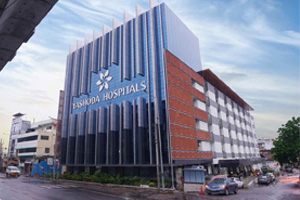
Benefits of Laser Prostatectomy at Yashoda Hospitals
At Yashoda Hospitals, Laser TURP (Laser Prostatectomy) is performed using state-of-the-art laser systems and advanced endoscopic technology to provide safe, effective, and long-lasting relief from symptoms of an enlarged prostate (BPH). Our experienced urologists ensure precision, minimal discomfort, and faster recovery for every patient.
- Minimally Invasive, No External Cuts
The procedure is performed through the urethra, avoiding surgical incisions and reducing the risk of complications. - Minimal Bleeding and Superior Safety
Laser energy seals blood vessels instantly, making the procedure safer for elderly patients and those on blood thinners. - Faster Recovery and Short Hospital Stay
Most patients return to light activities within a few days and often require only a short hospital stay. - Precision Laser Technology
Holmium, Thulium, and GreenLight laser systems allow controlled, accurate removal of prostate tissue for optimal urinary flow. - Excellent Symptom Relief
Patients experience significant improvement in urinary frequency, urgency, weak stream, and incomplete emptying. - Effective for Large Prostates
Laser TURP is highly effective even for men with substantially enlarged prostates who may not be candidates for traditional TURP. - Lower Risk of Sexual or Urinary Side Effects
With careful technique and advanced technology, the risk of incontinence or erectile issues is greatly minimised. - Daycare or Short-Stay Procedure
Many patients are discharged the same day or within 24 hours, enhancing convenience and comfort.






















 Appointment
 Second Opinion
 Live Chat
 Call
Call More
More