



Get a Free Second Opinion
Electrophysiology Clinics at Yashoda Hospitals in Hyderabad
- Lower procedural complications & mortality
- Increased survival rates in critical cardiac events
- Better long-term management & remote tracking
- Improved decision-making & personalized care
- Remote cardiac rhythm monitoring for pacemaker tracking devices
- ICD Implantations & implantable loop recorders for optimal device operation
- Dedicated cardiac electrophysiology surgeons
- State-of-the-art EP labs with advanced 3D cardiac mapping systems
- Real-time fluoroscopy & precision ablation technology
Best Electrophysiology Clinic in Hyderabad
Your heart relies on a quiet, steady electrical system to keep you moving. Every beat starts with a gentle electrical signal that follows a natural path, guiding each chamber to work in perfect harmony. When this rhythm loses its steady pace, it can feel unsettling, ranging from a minor flutter to a more serious concern. At Yashoda Hospitals, our electrophysiology clinic focuses on understanding these signals and restoring your heart’s natural balance. Our electrophysiologists are here to provide the clarity and care you need to regain your peace of mind and return to a healthy, active life.
Yashoda Hospitals operates a specialized electrophysiology clinic within our cardiology department, delivering the technical precision necessary to treat complex rhythm disorders. Patients across South India choose our center for its combination of clinical expertise and advanced technology, supported by three decades of multispecialty institutional experience. From initial arrhythmia diagnosis to intricate catheter ablations, our team delivers the specialized focus necessary for effective heart rhythm management.
Advanced Electrophysiology Excellence
Cardiac electrophysiology represents a gentle yet powerful frontier of modern heart care. Over the past two decades, this field has evolved from simple diagnostic testing into a curative discipline, offering precise solutions for arrhythmias that once required lifelong medicines. At Yashoda Hospitals, our electrophysiology clinic uses high-density 3D mapping to create a clear, real-time picture of your heart’s electrical health. This clear view helps our doctors precisely treat and fix irregular pathways in your heart, usually using less invasive methods. We combine this advanced technology with a compassionate, experienced approach to ensure you receive world-class care and a steady return to a healthy life.
Specialized Multidisciplinary Care Model
Arrhythmias rarely exist in isolation. Many patients who present to our electrophysiology clinic also manage hypertension, coronary artery disease, heart failure, valvular disorders, or structural heart conditions that directly influence their rhythm problem. Yashoda Hospitals addresses this reality through a structured multidisciplinary care model. Our electrophysiologists regularly collaborate with interventional cardiologists, cardiac surgeons, heart failure specialists, echocardiography experts, and clinical pharmacologists to build treatment plans that address not just the rhythm disorder but the full cardiac picture. This team-based approach improves diagnostic accuracy, reduces procedural risk, and ensures every patient receives care that is both comprehensive and coordinated.
Advanced Cardiac Mapping & Precision Arrhythmia Treatments
One of the most important tools our electrophysiology clinic uses is three-dimensional electroanatomic cardiac mapping. During a mapping procedure, our specialists guide thin wire catheters into the heart through a small incision in the groin. These catheters detect electrical signals at thousands of points across the heart’s inner surface and feed that data into a sophisticated computer system. The system then builds a precise, real-time 3D model of the heart’s electrical activity, showing exactly where abnormal signals originate and which pathways they travel. Once our electrophysiologists identify the source of the arrhythmia with this map, they apply catheter ablation to destroy the faulty tissue using radiofrequency energy or extreme cold (cryoablation). This targeted approach preserves healthy heart tissue, reduces radiation exposure, and improves long-term success rates significantly compared to older techniques.
Leading-Edge Electrophysiology Center in Hyderabad
Yashoda Hospitals operates among the select group of cardiac electrophysiology clinics in Hyderabad equipped to manage the full spectrum of complex arrhythmia cases, from common conditions to rare inherited rhythm syndromes. Our infrastructure, physician expertise, and procedural volume place us at the leading edge of cardiac rhythm care in the region.
- Our state-of-the-art EP labs are equipped with real-time 3D mapping systems compatible with CARTO and EnSite NavX, high-resolution X-ray imaging, and systems using heat and cold to treat heart rhythm disorders.
- Full implantable device program covering pacemakers, ICD implantations, biventricular devices, cardiac resynchronization therapy (CRT), and leadless pacing systems.
- Dedicated device follow-up clinics providing scheduled and on-demand check-ups for all patients with cardiac implantable electronic devices (CIEDs).
Emergency Care for Life-Threatening Cardiac Arrhythmias
Certain conditions demand immediate attention, such as arrhythmia treatments for irregular heart rhythm disorders. Ventricular fibrillation, a chaotic, disorganized electrical storm in the heart’s lower chambers, stops effective circulation within seconds and causes sudden cardiac arrest. Ventricular tachycardia, where the heart cannot self-terminate; complete heart block that causes the heart to stop pacing itself; and certain cases of refractory atrial fibrillation can all escalate into cardiac emergencies, requiring atrial fibrillation treatments. Yashoda Hospitals provides 24-hour emergency care for these life-threatening rhythm disorders. Our hospital integrates the electrophysiology clinic with a dedicated cardiac ICU, emergency catheterization labs, and a promptly arriving sudden cardiac arrest prevention team.
Rehabilitative Care & Long-Term Cardiac Rhythm Monitoring
Arrhythmia treatment is not the end of the journey; it is the beginning of a carefully managed recovery. After catheter ablation, device implantation, or any electrophysiology procedure, our team at Yashoda Hospitals builds a personalized follow-up plan for each patient. This plan includes scheduled device check-ups at our CIED clinic, remote cardiac monitoring where applicable, medication management, and regular echocardiographic or Holter monitoring to confirm the heart maintains a normal rhythm over time.
For patients with implantable devices, we conduct thorough programming checks every three to six months, or more frequently if symptoms arise. We educate patients on lifestyle adjustments to prevent arrhythmia recurrence, specifically targeting heart-healthy nutrition, stress management, sleep hygiene, and avoidance of known arrhythmia triggers. Our goal is simple: keep your heart in rhythm, long after you leave the hospital.
Why Choose Yashoda Hospitals for An Electrophysiological Clinic?
1. 30 years of multispecialty hospital excellence supporting complex cardiac procedures with the depth of infrastructure they demand.
2. Super-specialist electrophysiologists with advanced subspecialty training, extensive procedural experience, and international peer recognition.
3. Dedicated EP labs with 3D mapping, high-density catheter systems, and full ablation and device placement capabilities at the pacemaker implantation hospital at Yashoda.
4. 24/7 cardiac emergency infrastructure, including Cardiac ICU, round-the-clock cath lab access, and immediate arrhythmia treatment capability.
5. Seamless integration with cardiology, cardiac surgery, radiology, and other departments for truly comprehensive heart rhythm care.
6. Evidence-based protocols aligned with HRS, EHRA, and ACC/AHA guidelines, for every treatment decision we make, carry scientific and clinical authority.
7. Transparent, patient-centered communication, where we explain your diagnosis, your options, and your expected outcomes in plain language, so you make fully informed decisions about care.
Holistic Electrophysiological & Cardiac Rhythm Care Services
- We offer outpatient arrhythmia treatments and consultations for patients experiencing palpitations, fainting, shortness of breath, dizziness, or unexplained chest discomfort.
- Electrophysiology studies (EP studies) are invasive diagnostic procedures that map the heart’s electrical system and induce arrhythmias under controlled conditions to determine their precise cause.
- To provide comprehensive arrhythmia treatments, our specialists perform catheter ablation for complex conditions, such as atrial fibrillation, atrial flutter, and ventricular tachycardia, as well as targeted SVT treatments for supraventricular tachycardia.
- Implantable cardiac device therapy, such as pacemaker and ICD implantations, CRT devices, and leadless pacing systems.
- Cardioversion services for the controlled restoration of normal heart rhythm using precisely timed electrical shock.
- CIED device clinics for routine and urgent device programming, monitoring, and troubleshooting.
- Inherited arrhythmia syndrome management covers conditions, such as Long QT Syndrome, Brugada Syndrome, Arrhythmogenic Right Ventricular Cardiomyopathy (ARVC), and Catecholaminergic Polymorphic Ventricular Tachycardia (CPVT), by essentially providing arrhythmia treatments.
Meet Our Expert Electrophysiology Team
The electrophysiology team at Yashoda Hospitals brings together cardiac specialists whose clinical focus centers entirely on heart rhythm disorders. Each electrophysiologist on our team holds advanced post-doctoral certification in clinical cardiac electrophysiology. This training ensures expert mastery of the heart’s complex conduction system and the technical execution of high-definition catheter mapping, ablation, and device implantation. Our physicians actively contribute to continuing medical education, follow international clinical guidelines, and apply the most current evidence to every patient they treat. Cardiac electrophysiology specialists rely on extensive clinical experience to manage the full spectrum of rhythm conditions, ensuring that even the most complex cases receive treatment from a physician with a proven record of success.
They consult in both inpatient and outpatient settings, ensuring continuity of care across your entire treatment journey. We provide a seamless care experience where the same expert team manages every phase, from initial diagnosis and intervention to long-term device monitoring. This continuity ensures that your specific medical history informs every clinical decision, providing the confidence that comes from a team that fully understands your heart’s unique needs. We welcome patients seeking a second opinion, patients referred from other hospitals for complex procedures, and those who simply want access to the highest level of cardiac rhythm care available in Hyderabad.
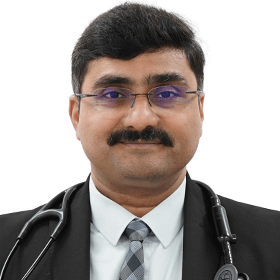
Dr Chandra Mouli S Mantravadi
Consultant Cardiologist & Electrophysiologist
Advanced Cardiac Rhythm Care & Electrophysiology Treatments
Yashoda Hospitals’ electrophysiology clinic provides a comprehensive range of interventional treatments and device-based therapies recognized by global cardiac rhythm organizations. We perform high-precision catheter ablations, including radiofrequency (heat) and cryotherapy (cold), arrhythmia treatment, and SVT treatments, to permanently neutralize the irregular electrical pathways responsible for atrial fibrillation, SVT, and ventricular tachycardia. These procedures use advanced 3D mapping to target specific areas such as the pulmonary veins or the cavotricuspid isthmus with the utmost precision.
For patients requiring rhythm support, our team specializes in implanting single-chamber, dual-chamber, and cutting-edge leadless pacemakers. Yashoda’s pacemaker implantation hospital provides life-saving treatments through ICD implantations of transvenous and subcutaneous origin, alongside cardiac resynchronization therapy (CRT), to improve heart function in complex heart failure cases. To ensure long-term safety, we offer advanced conduction system pacing, lead extractions, and the insertion of implantable loop recorders for continuous heart monitoring. We also perform advanced procedures such as left atrial appendage (LAA) closure, using the Watchman device to reduce stroke risk in patients with atrial fibrillation, and conduct comprehensive EP studies to map and evaluate the heart’s electrical stability with HD precision.
Treatments & Surgical Procedures Directly Related to Electrophysiology:
- Radiofrequency catheter ablation (RFA) for cardiac arrhythmia treatment
- Cryoablation (cryotherapy catheter ablation)
- Pulmonary vein isolation (PVI) for atrial fibrillation
- Atrial flutter ablation (cavotricuspid isthmus ablation)
- SVT Treatment: supraventricular tachycardia ablation
- Ventricular tachycardia (VT) ablation: endocardial & epicardial
- AV nodal ablation (for rate control in refractory AF)
- Accessory pathway ablation (for Wolff-Parkinson-White syndrome)
- Permanent pacemaker implantation (single-chamber & dual-chamber)
- Leadless pacemaker implantation (transcatheter, intracardiac)
- Implantable cardioverter-defibrillator (ICD) implantation
- Subcutaneous ICD implantation (S-ICD)
- Cardiac resynchronization therapy: CRT-P (biventricular pacemaker) & CRT-D (biventricular defibrillator)
- His-bundle pacing & left bundle branch area pacing (conduction system pacing)
- Implantable loop recorder (ILR) insertion for long-term rhythm monitoring
- Transvenous lead extraction
- DC cardioversion (electrical cardioversion)
- Electrophysiology study (EP study) with programmed electrical stimulation
- Watchman device placement (left atrial appendage closure for stroke reduction in AF) is also performed at the pacemaker implantation hospital
Understanding Heart Rhythm Conditions We Treat at Our Electrophysiology Clinic
This specialized cardiac program treats a comprehensive range of rhythmic disorders, from common arrhythmias, such as atrial fibrillation and flutter, to complex supraventricular tachycardias. Their expertise covers both ventricular tachycardia and fibrillation, including the management of frequent premature ventricular contractions. Patients with conduction issues, such as sick sinus syndrome, AV blocks, and bundle branch blocks, receive tailored diagnostic and therapeutic care.
The team also manages high-risk genetic conditions, including Long and Short QT Syndromes, Brugada Syndrome, and CPVT. Structural diseases associated with arrhythmias, such as hypertrophic cardiomyopathy, ARVC, and cardiac sarcoidosis, are also primary areas of focus. Beyond chronic management, they provide secondary sudden cardiac arrest prevention and post-resuscitation care for survivors of sudden cardiac arrest. The program evaluates undiagnosed syncope and treats secondary complications like tachycardia-induced cardiomyopathy.
The heart’s electrical system initiates and regulates every heartbeat before birth. Factors such as age, underlying diseases, genetics, and structural abnormalities in the heart muscle disrupt these electrical impulses and cause arrhythmias. A few arrhythmias induce just palpitations. Others risk stroke, heart failure, or sudden cardiac death. Our electrophysiology department at Yashoda Hospitals treats everything from common rhythm disorders to rare and severe hereditary illnesses requiring advanced expertise. Our specialists treat a wide range of heart rhythm disorders, demonstrating the full clinical depth and versatility of modern electrophysiology. Atrial fibrillation affects millions of individuals worldwide and accounts for most clinical demand at high-volume cardiac electrophysiology clinics.
Modern Electrophysiology Labs and 3D Mapping Systems
Advanced electrophysiology care at our facility leverages integrated lab environments where real-time mapping, catheter ablation, and imaging occur simultaneously to ensure superior procedural safety and precision. Using modern 3D electroanatomic systems, our team creates detailed, color-coded maps that distinguish healthy tissue from scarred areas, targeting the exact origin of abnormal signals. High-density mapping catheters further enhance this process by providing exceptional spatial resolution, which significantly reduces procedure times while protecting critical conduction pathways. By incorporating Intracardiac Echocardiography (ICE), we can visualize catheter positioning in real time, minimizing radiation exposure from traditional X-rays while verifying successful outcomes before the patient leaves the lab.
Our diagnostic suite includes diverse electrocardiogram (ECG / EKG) options, ranging from standard 12-lead resting and exercise tests to signal-averaged ECGs (SAECG) for risk assessment. To capture irregular disturbances, we offer monitoring solutions, such as ambulatory Holter monitoring, long-term monitoring, and implantable loop recorders (ILR) for long-term tracking. Specialized interventional diagnostics utilize electrophysiology studies (EPS) and 3D electroanatomic cardiac mapping (including CARTO and EnSite systems) to pinpoint arrhythmias with precision. During these procedures, we employ high-density mapping with multi-electrode catheters and intracardiac echocardiography (ICE) for real-time anatomical visualization. We provide essential management through tilt table testing, genetic testing, and counseling & dedicated remote CIED monitoring for implanted devices.
Insurance and Financial Information
Medical insurance provides financial protection and peace of mind by covering healthcare costs. This allows individuals to prioritise recovery over expenses. While most insurance covers treatment costs, including tests and medications, we recommend that you confirm specific coverage details with your provider.
Read more about – Insurance and Financial Information.
International Patient Services
Yashoda Group of Hospitals in Hyderabad has provided three decades of exceptional healthcare, blending advanced technology with experienced staff to meet international standards. Their comprehensive international patient services manage everything from visas and travel to insurance, ensuring a seamless and supportive healthcare experience.
Read more about – International Patient Services.
FAQ’s
What does an electrophysiology clinic treat?
Electrophysiology (EP) clinics diagnose and treat cardiac rhythm abnormalities. Atrial fibrillation, SVT, VT, and heart block are the perfect examples. Palpitations, dizziness, fainting, and abnormal heartbeats are common reasons for visits. Advanced technologies, including ECG, Holter monitoring, and 3D mapping, help the clinic diagnose heart electrical disorders and treat them with medicines, catheter ablation, or pacemakers or ICDs.
How do I know if my palpitations are serious enough to visit an electrophysiology clinic?
Occasional palpitations are harmless, but if they are frequent, prolonged, or accompanied by symptoms such as dizziness, chest discomfort, dyspnea, or fainting, you should seek medical attention. Palpitations that interfere with everyday activities or occur during rest or sleep might suggest an underlying arrhythmia. An electrophysiology clinic may do extensive testing to decide if your symptoms are benign or require treatment, thus avoiding complications such as stroke or unexpected cardiac events.
What happens during an electrophysiology (EP) study?
An electrophysiological (EP) study is a minimally invasive diagnostic test that evaluates the heart’s electrical connections. Thin, flexible catheters are placed into blood arteries (often in the groin) and directed to the heart. These catheters capture electrical signals and help in identifying faulty electrical connections that cause arrhythmias. The treatment is normally performed under local anesthesia and sedation. In many cases, if an abnormal rhythm is found, therapy such as catheter ablation can be performed during a single visit.
What is 3D cardiac mapping, and why does it matter for arrhythmia treatment?
3D cardiac mapping is an advanced imaging technology that produces a comprehensive, real-time image of the heart’s electrical activity. It lets electrophysiologists precisely identify abnormal impulses that cause arrhythmias. This method increases the precision and safety of procedures such as catheter ablation by limiting harm to healthy tissue and shortening procedure times. It is especially effective for complex arrhythmias when conventional methods may not provide sufficient data.
Is catheter ablation a safe and permanent cure for arrhythmias?
Catheter ablation is a common and relatively safe treatment for treating a wide range of arrhythmias. It works by removing small regions of defective cardiac tissue that cause irregular electrical activity. It can provide long-term relief or perhaps a cure for illnesses such as SVT and some types of atrial fibrillation. Its efficacy is determined by the type of arrhythmia and the patient’s specific factors. For the best outcomes, some individuals may need to have multiple surgeries or take prolonged prescriptions.
Do I need surgery to get a pacemaker or ICD fitted?
Pacemaker or implanted cardioverter-defibrillator (ICD) implantation is a small surgical procedure that does not need open-heart surgery. It is often conducted under local anesthetic and sedation. To control rhythm, a small device is implanted beneath the skin near the chest and attached to the heart using leads. Most patients return home after a day and resume their routine activities within just a few days. These devices can save the lives of people who have irregular cardiac rhythms or are at risk of developing life-threatening arrhythmias.
What is the typical recovery time after procedures like ablation or device implantation?
The recovery period varies with the surgery. Most patients can resume regular activities in 2-5 days after catheter ablation. Recovery from pacemaker or ICD insertion may take 1-2 weeks, with limitations on arm mobility. Full healing and symptom relief may take many weeks. We will give detailed post-procedure care recommendations to ensure proper healing and results.
u003ch5 class=u0022style-scope ytd-watch-metadatau0022u003eకండరాలు మరియు లిగమెంట్లలో నొప్పి ఉందా?u003c/h5u003er
u003ch4u003ePatient Testimonials For Orthopaedicsu003c/h4u003ernu0026nbsp;rnrn
u003ch4u003eHealth Blogs for Orthopaedicsu003c/h4u003er

 Appointment
 Second Opinion
 Live Chat
 Call
Call More
More


