Select Page

Get a Free Second Opinion

Thyroidectomy Cost In India

– Providing 30+ years of world-class healthcare to diverse communities.
– 600+ specialists across 62 medical specialties providing expert care
– Advanced technology and procedures for top-quality patient care
– Minimally invasive procedures for faster recovery and comfort
– Advanced surgical suites and ICUs for critical care


Thyroidectomy is a surgical method to get rid of the thyroid gland completely or partially. The thyroid gland is a small butterfly-shaped organ located at the base of the neck. The thyroid gland plays an important role in regulating metabolism, energy production, heart rate, and body temperature by releasing hormones. When the thyroid gland develops structural issues or its hormone production goes out of control, surgery is typically suggested to restore health and avoid problems. The need for thyroid surgery typically arises when the thyroid gland develops nodules, enlarges, or abnormal tissue growth interferes with normal function or causes significant concern due to a severe disease. In some patients, the thyroid grows extremely large in size, causing a visible swelling in the neck or causing signs such as difficulty swallowing, breathing discomfort, or continuous pressure in the throat. In other cases, abnormal cells are identified during a medical examination that might require removal by surgery to ensure precise identifiction and proper management.

A thyroidectomy is completed by an expert surgeon under carefully monitored conditions. During the surgery, the surgeon makes a small cut in the lower part of the neck to get to the thyroid gland. State-of-the-art surgical techniques and modern technology assist in improving accuracy, cause minimal damage to nearby nerves and structures, and increase the overall safety. Particular emphasis is given to safeguarding the nerves that are responsible for your voice, as well as the nearby glands that control calcium levels inside the body. Thyroidectomy has gradually evolved as a procedure over the years, with better surgical planning, imaging methods, and anesthesia support that contribute to better results. Many patients encounter noteworthy relief from symptoms once the problem-causing thyroid tissue is removed.

What is the cost of thyroidectomy in India?

The cost of thyroidectomy in India generally ranges between Rs. 50,000 and Rs. 4,00,000. The tabular column below provides a summary of approximate cost ranges for all recognized types of thyroidectomy surgery.


Enquire now

Who Needs Thyroidectomy Surgery?

Thyroidectomy may be suggested for patients with certain thyroid diseases where the gland shows notable symptoms, along with functional imbalances, or a suspected serious disease. Common situations where thyroidectomy surgery may be suggested include: 

  • Thyroid Cancer: Surgery is the most preferred treatment when thyroid cancer is diagnosed in the thyroid gland to remove the problem-causing tissue and block it from spreading.
  • Suspicious Thyroid Nodules:  Nodules that emerge unusually on imaging or biopsy and have a risk of malignancy might require surgical removal for final identification and treatment. 
  • Large Thyroid Goiter: A thyroid gland with a considerable increase in size that causes visible swelling in the neck or compresses nearby structures might need surgery to provide relief from symptoms. 
  • Hyperthyroidism that cannot be controlled with medicines in cases of over-reactive thyroid diseases, such as Graves’ disease, does not respond to being treated with medicines or other treatments, then surgery may be suggested to control the production of hormones.
  • Multinodular Goiter: Multiple nodules within the thyroid gland that grow progressively or produce more than the required amount of hormones might need thyroidectomy. 
  • Thyroid nodules causing pressure symptoms like difficulty swallowing, breathing issues, hoarseness, or discomfort in the throat might need surgical treatment. 
  • Recurrent thyroid cysts are fluid-filled cysts that repeatedly refill or cause discomfort and might require removal by surgery. 
  • An enlarged thyroid gland that affects the appearance and causes cosmetic concerns or deformities in the neck might require treatment with thyroidectomy. 
  • Inconclusive or uncertain biopsy outcomes that cannot clearly rule out cancer, so thyroidectomy may be performed to obtain a conclusive identification. 
  • Retrosternal (substernal) Goiter is when the thyroid gland grows downward into the chest cavity, and might compress the trachea or esophagus, therefore might require thyroidectomy.

Enquire now

Types Of Treatment For Thyroidectomy

In some individuals, thyroid diseases can be managed without surgery depending on how serious the disease is and the overall health of the patient.

  • Medications: Medicines may be advised to manage thyroid hormone production, especially in conditions such as Hyperthyroidism or Graves’ disease.
  • Radioactive Iodine Treatment: This therapy utilizes radioactive iodine to demolish overreactive thyroid cells and decrease excessive thyroid hormone production. 
  • Thyroid Hormone Suppression Treatment: Synthetic thyroid hormones are sometimes utilized to manage the growth of certain nodules or decrease the thyroid hormone imbalance. 
  • Observation in case of small thyroid nodules that do not show any signs or symptoms of malignancy, and might only need regular check-ups and imaging. 
  • Minimally invasive nodule ablation is a method that involves radiofrequency ablation or ethanol ablation, which can diminish certain non-malignant thyroid nodules without removing the gland.
  • Lifestyle and medical management of thyroid diseases includes dietart guidance, stress management, and appropriate medical supervision that can help manage mild thyroid dysfunction in some cases.

Enquire now

Factors Influencing The Cost Of Thyroidectomy

  • Type of thyroidectomy procedure
  • Hospital infrastructure and accreditation 
  • Use of state-of-the-art methods like robotic or endoscopic surgery
  • Diagnostic Tests required before thyroidectomy
  • Type of anesthesia and surgical tools utilized 
  • Duration of stay at the hospital
  • Post-surgery medicine costs and follow-up care
  • City or location of the hospital 
  • The patient’s overall health condition and the complexity of the case

Enquire now

Types Of Thyroidectomy

  • Total Thyroidectomy: This method involves the complete removal of the thyroid gland. It is usually carried out for diseases such as thyroid cancer, large goitres, or in serious cases of hyperthyroidism. After the surgery is carried out, individuals normally need lifelong thyroid hormone replacement treatment.
  • Partial Thyroidectomy: In this method, only a part of the thyroid gland is removed. It is usually carried out when a disease affects only a certain area of the thyroid gland. While the remaining part of the healthy tissue can still function normally.
  • Hemithyroidectomy: This procedure involves the removal of one half of the thyroid gland. This method removes one lobe along with the isthmus. It is mostly suggested for a single thyroid nodule or localized thyroid condition affecting only one side. 
  • Thyroid Lobectomy: This surgery removes one complete lobe of the thyroid gland. It is often carried out when a suspected nodule is confined to a single lobe and assists in safeguarding the functionality of the remaining gland. 
  • Subtotal Thyroidectomy: In this type of thyroidectomy surgery, most of the thyroid gland is removed, but a small part is left. This is normally considered in some cases of multinodular goiter or hormone overproduction to restore limited thyroid gland functionality. 
  • Near-Total Thyroidectomy: Almost the entire thyroid gland is removed while leaving behind a very small amount of tissue near critical structures like nerves and parathyroid glands. This approach assists in reducing problems while providing successful treatment for the disease.
  • Minimally-Invasive Thyroidectomy: This technique utilizes smaller incisions and specialized tools to remove the thyroid tissue. Its objective is to decrease surgical trauma, minimize scarring, and allow faster recovery for suitable patients. 
  • Endoscopic Thyroidectomy: In this method, the surgeon performs the procedure utilizing a small camera called an endoscope, along with specialized tools pushed through small incisions. This procedure offers better cosmetic results with less visible scarring. 
  • Robotic-Assisted Thyroidectomy: State-of-the-art robotic systems assist surgeons in carrying out this approach with greater accuracy and control. This method can improve visualization and might decrease scarring in some patients.
  • Transoral Thyroidectomy, also termed as scarless thyroid surgery, is a creative technique where the thyroid gland is removed through small incisions made inside the mouth. Since there is no external incision on the neck, it provides a scar-free cosmetic result.

Enquire now

Post-Operative Care For Thyroidectomy

  • Proper care after surgery is vital for smooth recovery and long-term health. 
  • The patient should take doctor suggested medicines regularly, that includes thyroid hormone replacement if it is suggested. 
  • The patient should keep the surgical incision area clean and dry to avoid infection. 
  • The patient should avoid strain-causing activities and heavy lifting for a few weeks after the thyroidectomy procedure.
  • The patient should strictly follow the doctor’s instructions with respect to proper diet and required hydration after the procedure. 
  • The patient should attend all the scheduled follow-up visits for examination of the wound and hormone monitoring. 
  • The patient should watch for signs such as continuous swelling, breathing difficulty, or voice changes and report them immediately. 
  • The patient should perform gentle neck movements or exercises only if suggested by the doctor to maintain flexibility and decrease stiffness.
  • The patient should attend regular thyroid hormone level evaluations to make sure of the correct dosage of replacement medicine.

Enquire now

Making An Informed Decision About Thyroidectomy

A patient finalising to undergo thyroidectomy needs careful examination of their medical condition, signs, and overall health. It is vital to talk with an experienced surgeon who can explain the diagnosis, treatment options, and expected results. Patients should understand the potential benefits of the surgery, mainly in conditions like thyroid cancer or serious hyperthyroidism. Discussing possible risks, recovery time, and the requirement for long-term thyroid hormone treatment can assist in setting realistic expectations. Getting a second opinion might also provide better clarification and confidence before thyroidectomy. Understanding the method and preparing mentally and physically can contribute to a smooth surgical procedure. Making a well-informed decision mainly assists patients in choosing the path of treatment that best supports their long-term health and quality of life.

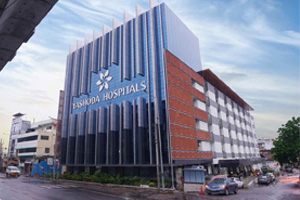
Yashoda Hospitals should be the premier choice for patients to undergo the thyroidectomy procedure because it offers state-of-the-art minimally invasive techniques like scarless surgery, expert surgical oncologists, and complete care for thyroid cancer, nodules, and goiter. Along with this thye provide advanced facilities, personalized care, and a focus on preserving vocal cords and calcium levels for improved results for the patient.

Enquire now

Why Choose Yashoda Hospitals

Yashoda Hospitals is committed to providing world-class treatment for patients from across the globe. With the unique combination of state-of-the-art technology, intuitive care, and clinical excellence, we are the healthcare destination for thousands of international patients in India.

blank
Comprehensive Care

On the journey to good health, we understand that it is important for you to feel at home. We plan out all aspects of your trip.

blank
Expert Doctors

Experienced specialists perform non-invasive and minimally invasive surgeries to provide the best treatment for international patients.

blank
Cutting-Edge Technology

Our hospitals are equipped with advanced technology to perform a wide range of procedures and treatments.

blank
Clinical Excellence

We deliver excellence by delivering quick and efficient healthcare and through pioneering research that helps all our future.patients.

All major insurance are accepted for
Thyroidectomy Cost In India Treatment


Our Locations

  • Malakpet Location

    Malakpet

  • Somajiguda Location

    Somajiguda

  • Secunderabad Location

    Secunderabad

  • Hitec City Location

    Hitec City

FAQ's

After the removal of the thyroid gland through the thyroidectomy technique, the body can no longer generate thyroid hormone by itself. Patients normally need lifelong thyroid hormone replacement medicines to maintain proper metabolism, energy levels, and overall body functions.

In the short term, low calcium levels might be observed because parathyroid glands located near the thyroid gland can be affected during the thyroidectomy procedure. In most patients, hypocalcemia ( that is, low levels of calcium) improves within a few days to a few weeks, though it may occasionally last longer and need supplements.

Yes, women can have a healthy pregnancy even after undergoing the thyroidectomy procedure, by undergoing a proper hormone replacement treatment and regular observation. Even after the thyroidectomy, fertility and pregnancy results are mostly normal.

Most patients recover after undergoing a thyroidectomy procedure within 1-2 weeks for normal activities. However, for complete healing and adjusting to levels of thyroid hormones returning to normal levels might take several weeks.

Hoarseness in voice can occur for a short time after thyroidectomy due to irritation of the nerves controlling the vocal cords. In most cases, the voice improves within a few days to weeks, though very rarely it may take several months.

Yes, thyroidectomy is considered a major surgical method because it involves the removal of a vital endocrine gland in the neck region after undergoing general anesthesia. Nevertheless, thyroidectomy is usually safe when carried out by experienced surgeons with modern surgical techniques.

Terms and conditions

All the cost and surgery information provided on the website is primarily to enable the users to obtain a better understanding of Yashoda Hospitals and the medical services provided by it, and the information thereby provided is subject to changes and modifications as and when required without any prior notice. Actual cost of the surgery details would be confirmed at the hospital after doctor consultation only.

Yashoda Hospitals does not represent or endorse the accuracy, completeness or reliability of any information displayed, uploaded or distributed through the website. The usage of the content implies that you acknowledge that any reliance upon any such statement or information shall be at your own risk. Yashoda Hospitals does not resume any responsibility related to the accuracy of information provided or made available. None of the individual developers, system operators, third-party contributors and management of Yashoda Hospitals or anyone else connected to Yashoda Hospitals can be held responsible for the results or consequences incurred due to any reliance being placed or adopt any of the information presented on this website.

Book an appointment
in 2 minutes