How is Cyst Excision performed: Before, During and After.
Proper care before, during, and after cyst excision surgery is essential to ensure a safe procedure, smooth recovery, and reduced risk of complications.
Pre-operative Care
Before cyst excision surgery, the doctor evaluates the cyst’s size, location, and symptoms, and reviews the patient’s medical history, medications, and allergies to ensure safety. Basic tests or imaging may be recommended if needed. Patients are advised to keep the area clean, avoid applying creams or lotions on the day of surgery, and, if instructed, stop certain medications such as blood thinners. If regional or general anesthesia is planned, fasting for a few hours may be required.
Intra-operative Care
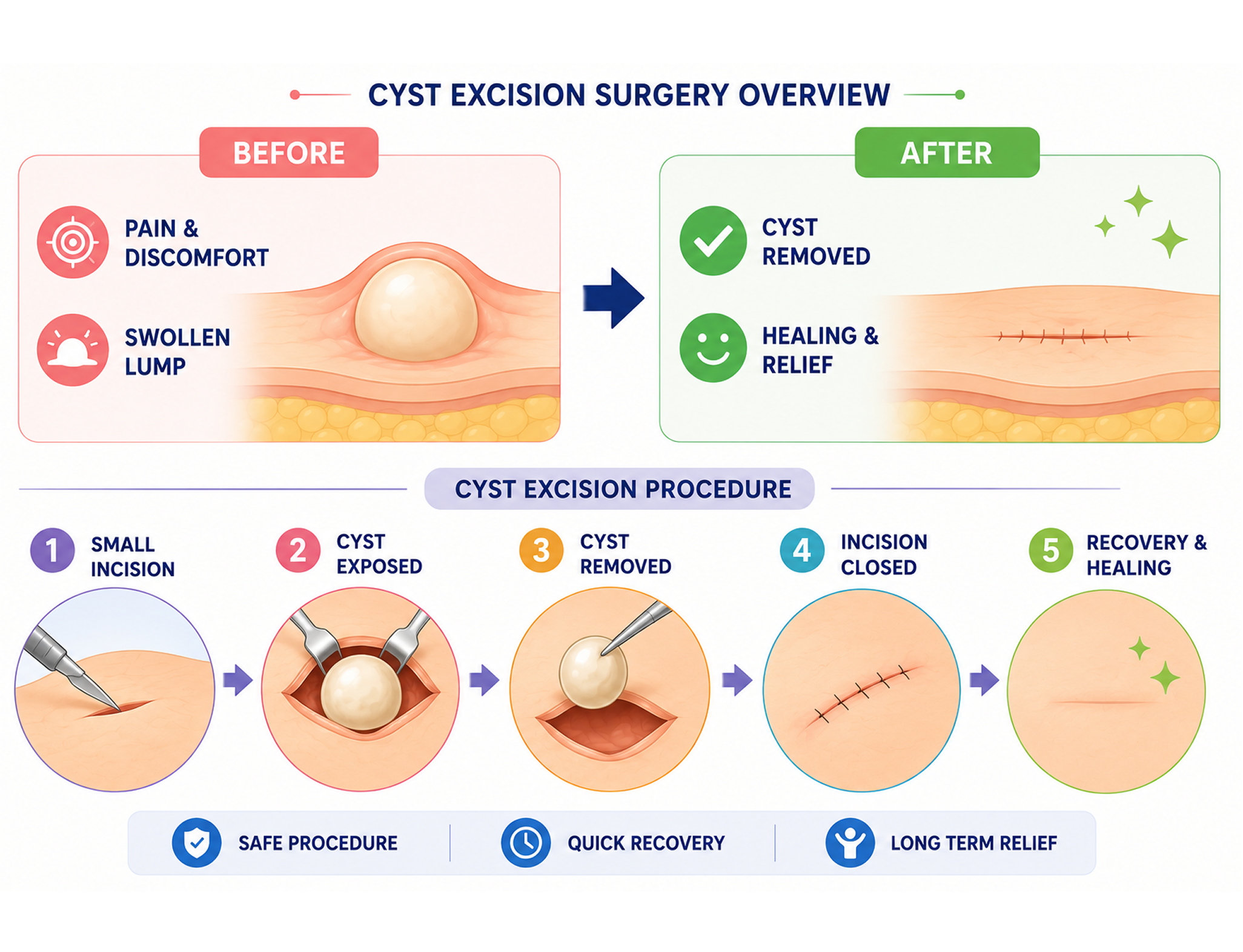
The surgical area is cleaned and sterilized, and local anesthesia is given to numb the region. The surgeon then makes a small incision over the cyst and carefully removes the entire cyst along with its capsule or lining. Removing the cyst completely is important to prevent recurrence. In some cases, the surrounding tissue may also be cleaned if there is infection or inflammation. After removal, the incision is closed using stitches or surgical sutures, and a sterile dressing is applied to protect the wound.
Post-operative Care
After cyst excision surgery, patients may experience mild pain, swelling, or redness at the surgical site, which typically resolves within a few days. Doctors may prescribe pain relief medication or antibiotics if necessary. It is important to keep the wound clean and dry and change the dressing as advised. Patients should avoid heavy physical activity or pressure on the surgical site until it has healed. Follow-up appointments are typically scheduled to monitor healing. With proper care, most patients recover quickly and can return to their normal routine within a few days to a week.









 Appointment
 Second Opinion
 Live Chat
 Call
Call More
More