Select Page

Get a Free Second Opinion

Keratoconus Surgery Cost In India

– Providing 30+ years of world-class healthcare to diverse communities.
– 600+ specialists across 62 medical specialties providing expert care
– Advanced technology and procedures for top-quality patient care
– Minimally invasive procedures for faster recovery and comfort
– Advanced surgical suites and ICUs for critical care


Keratoconus surgery is a vital step in managing a condition where the cornea, the clear front surface of the eye, becomes thin and bulges outward into a cone-like shape. This change affects how light enters the eye, causing blurred or distorted vision. Over time, the cornea also becomes weaker due to changes in natural structure, making the condition progressive. Surgical treatment of a keratoconus eye concentrates on improving the strength, shape, and clarity of the cornea. Instead of just correcting the vision, these methods work on stabilizing the cornea and enhancing how it functions. Some methods assist in strengthening the corneal fibers, while others aim at improving its surface for a better light focus. In more advanced situations, surgery for keratoconus can assist in restoring clarity and support better vision. With developments in eye care. Keratoconus surgery has become more accurate and effective. It not only assists in controlling the disease from getting worse, but also plays an important role in maintaining long-term visual quality and overall health of the eye. Keratoconus surgery is normally carried out as a minimally invasive day-care treatment under the influence of local anesthesia. The eye is numbed, and depending on the approach, the surgeon gently removes the outer layer of cornea to work through it. A special vitamin solution is applied, which is followed by a controlled exposure to light to provide strength to corneal fibers, or little implants might be placed to reshape the cornea. In advanced cases, the damaged part of the eye might be replaced with healthy donor tissue.

What is the cost of keratoconus surgery in India?

The cost of keratoconus surgery in India ranges from 25,000 Rs to 1,50,000 Rs per eye. The table below provides approximate cost ranges for all recognized types of Keratoconus surgery in India.

Types of keratoconus surgery  Cost In India 
Corneal Collagen Cross-Linking (Corneal Collagen Cross-Linking/C3R)  35,000 Rs to 60,000 Rs 
Epithelium-On (Transepithelial Corneal Collagen Cross-Linking)  40,000 Rs to 65,000 Rs 
Accelerated Corneal Collagen Cross-Linking 50,000 Rs to 75,000 Rs 
Customized/Combined Corneal Collagen Cross-Linking 70,000 Rs to 90,000 Rs 
Intracorneal Ring Segments (INTACS/ICRS)  60,000 Rs to 90,000 Rs 
Topography-Guided Photorefractive Keratectomy + Corneal Collagen Cross-Linking  60,000 Rs to 80,000 Rs 
Implantable Collamer Lens  80,000 Rs to 1,00,000 Rs 
DALK (Partial Corneal Transplant)  80,000 Rs to 1,20,000 Rs 
Penetrating Keratoplasty (Full Transplant)  1,00,000 Rs to 1,50,000 Rs
Descemet Stripping Endothelial Keratoplasty(Endothelial Transplant) 90,000 Rs to 1,30,000 Rs 
Descemet Membrane Endothelial Keratoplasty (Advanced Endothelial Transplant)   1,00,000 Rs to 1,40,000 Rs 
Bowman Layer Transplant ( Rare)  1,00,000 Rs to 1,80,000 Rs 

Enquire now

Who Needs Keratoconus Surgery?

  • Keratoconus surgery is recommended in patients with progressive worsening of vision despite glasses or contact lenses.
  • It is also suggested that in patients with increased corneal thinning or bulging as seen on eye scans.
  • It is also recommended when there are frequent changes in spectacle power with poor visual clarity.
  • Keratoconus surgery is also recommended in patients with inability to tolerate contact lenses due to the discomfort caused by them.
  • It is also suggested for patients with advanced keratoconus that results in significant vision distortion.
  • It is also suggested that when there is a development of corneal scarring, it affects vision.
  • Surgery is also recommended as a treatment option in case of very irregular astigmatism that cannot be corrected by lenses.
  • Surgery is recommended in younger patients who are at risk of keratoconus progressing further in them.
  • It is also recommended, when the condition suddenly becomes worse due to corneal swelling.
  • It is also suggested that non-surgical treatments fail to maintain vision.

Enquire now

Types Of Treatment For Keratoconus

  • Glasses: These are useful in the initial stages to correct mild blurred vision, but become less effective as the cornea becomes irregular.
  • Soft Contact Lenses: Special soft contact lenses can improve comfort and vision in mild cases of Keratoconus, even though they might not fully correct the irregular shape.
  • Rigid Gas Permeable (RGP) Lenses: Are hard lenses that provide clearer vision by creating a smooth optical surface over the irregular cornea.
  • Hybrid Contact Lenses: Are used to combine a rigid center with a soft outer ring, offering both sharp vision as well as improved comfort.
  • Scleral Lenses: Are large lenses that rest on the white part of the eye and vault over the cornea, giving excellent vision in advanced cases.
  • Piggyback Lens System: Is a soft lens that is worn under the rigid gas permeable lens to improve comfort, while maintaining good vision quality.
  • Custom Soft Lenses For Keratoconus: Are designed especially for irregular corneas, offering better fit and vision than regular soft lenses.
  • PROSE (Prosthetic Replacement Of The Ocular Surface Ecosystem) is a highly customized scleral lens system used in severe cases to improve vision and protect the cornea.
  • Eye Drops (Lubricants): Helps in relieving dryness and irritation, but it does not treat the underlying condition.
  • Avoiding eye rubbing is a crucial lifestyle measure, as rubbing eyes can worsen corneal thinning and also worsen the progression of keratoconus.
  • Allergy Management: Treating eye allergies reduces itching and rubbing, thereby slowing keratoconus disease progression.

Enquire now

Factors Influencing the Cost Of Keratoconus Surgery

  • Type of surgery performed
  • Stage/severity of keratoconus
  • Surgeon’s experience and expertise
  • Hospital or clinic type
  • City/location of the treatment
  • Technology and equipment used
  • Complexity of the case
  • Pre-operative tests and diagnostics
  • Post-operative care and follow-ups
  • Insurance coverage
  • Additional expenses

Enquire now

Types Of Keratoconus Surgery

  • Corneal Collagen Cross-Linking (CXL/C3R): Provides strength to the cornea using riboflavin drops and UV light to stop the progression of the keratoconus disease.
  • Epithelium-On (Transepithelial Corneal Collagen Cross-Linking):A gentle version of corneal collagen cross-linking is performed without removing the outer layer, thereby enabling a quicker recovery.
  • Accelerated Corneal Collagen Cross-Linking: A faster form of corneal collagen cross-linking using higher intensity UV light to reduce the time of treatment.
  • Customized/Combined Corneal Collagen Cross-Linking: Tailored corneal collagen cross linking mostly combined with other techniques to stabilize and improve vision.
  • Intracorneal Ring Segments (INTACS/ICRS): Small ring implants are placed in the cornea to flatten and reshape it for better vision.
  • Topography-Guided Photorefractive Keratectomy + Corneal Collagen Cross-Linking: Laser reshapes the cornea, followed by corneal collagen cross-linking to provide strength to it and prevent further worsening.
  • Implantable Collamer Lens (ICL): A lens is inserted into the eye to correct vision without altering the cornea.
  • DALK (Partial Corneal Transplant): Is a technique that replaces the front layers of the cornea while keeping the inner layers intact.
  • Penetrating Keratoplasty (Full Transplant): The entire cornea is replaced with donor tissue in advanced cases of keratoconus.
  • DSEK (Endothelial Transplant): Only the inner corneal layer is replaced, leading to quicker healing than the full transplant.
  • DMEK (Advanced Endothelial Transplant): Is a more accurate inner layer transplant with better visual outcomes and faster recovery.
  • Bowman Layer Transplant: A rare procedure where a thin layer is added to provide strength to the cornea and also provide support.

Enquire now

Post-Operative Care Of Keratoconus Surgery

  • The patient should use the doctor-suggested eye drops frequently (antibiotics, steroids, and lubricants) as advised.
  • The patient should avoid rubbing or touching the eyes to prevent damage or infection.
  • The patient should wear protective glasses or an eye shield while sleeping.
  • The patient should also keep the eyes clean and dry, and avoid water entering the eye for a few days.
  • The patient should avoid dusty environments, smoke, and pollution.
  • The individual should also limit screen time, as it can cause eye strain in the initial phases of recovery.
  • The patient should also not apply any eye makeup until the doctor allows, and avoid swimming and heavy physical activity for at least a few days after surgery.
  • The patient should attend all follow-up appointments for proper monitoring and report any signs such as pain, redness, or sudden loss of vision, immediately.
  • The patient should also follow a healthy lifestyle and stay hydrated to support proper healing.

Enquire now

Making An Informed Decision On Keratoconus Surgery

The patient making an informed decision about surgery for keratoconus needs to have a clear understanding of their condition and treatment goals. The patient should consult an experienced specialist to evaluate the stage and progression of the disease before choosing a procedure. The patient should understand the benefits, limitations, and expected results of each surgical option. They should also consider factors like recovery time, long-term stability, and impact on vision quality. The patient should also discuss costs, follow-up care, and possible risks to avoid being surprised later. A well-informed choice by the patient helps in ensuring better results, safety, and long-term eye health.

Yashoda Hospitals should be the premier choice for patients who want to undergo keratoconus surgery due to their advanced cornea transplant center and specialized treatments like corneal collagen cross-linking, designed to stop the progression of keratoconus disease. Yashoda Hospitals’ ophthalmology department is provided with modern diagnostic tools like corneal mapping and pachymetry to accurately examine corneal thinning and shape. Patients at Yashoda Hospitals have access to advanced laser systems and specific operating theaters for both minimally invasive and complicated ocular surgeries.

Enquire now

Specialist Doctors

Dr. Ajit Babu Majji

MD (Ophthalmology), FRCS

Lead Consultant Vitreo - Retinal Services

English, Telugu, Hindi
37 Yrs
Hitec City
5 (1 reviews)

Dr. Bhanu Prakash M

MS, Fellow (Cornea), FICO, FAICO (Refractive Surgery), FRCS

Sr. Consultant Cataract Cornea and Refractive Surgeon

English, Hindi, Telugu, Kannada
17 Yrs
Hitec City
4.5 (26 reviews)

Dr. Sariki Veda Sai Maheswari

MBBS, MS, FCRS

Cataract Phaco & Lasik Surgeon
Consultant Ophthalmologist.

English, Hindi, Telugu, Marathi, Kanada
2 Yrs
Hitec City

Dr. Sujeeth Modaboyina

MBBS (Osmania), MD (AIIMS, New Delhi)

Sr. Consultant Cataract Surgeon, Pediatric/Neuro Ophthalmology Refractive Surgeon, Oculoplasty Specialist.

Telugu, Hindi, English
11 Yrs
Secunderabad

Dr. S. Nikitha

MS Ophthalmology

Medical Retina, Phaco Surgeon Consultant Ophthalmologist

English, Hindi, Telugu
4 Yrs
Secunderabad

Dr. S.A. Hussain Naqvi

MS, FLVPEI

Sr. Consultant Cataract, Glaucoma and Lasik Surgeon

English, Telugu, Hindi and Urdu
19 Yrs
Somajiguda
5 (5 reviews)

Why Choose Yashoda Hospitals

Yashoda Hospitals is committed to providing world-class treatment for patients from across the globe. With the unique combination of state-of-the-art technology, intuitive care, and clinical excellence, we are the healthcare destination for thousands of international patients in India.

blank
Comprehensive Care

On the journey to good health, we understand that it is important for you to feel at home. We plan out all aspects of your trip.

blank
Expert Doctors

Experienced specialists perform non-invasive and minimally invasive surgeries to provide the best treatment for international patients.

blank
Cutting-Edge Technology

Our hospitals are equipped with advanced technology to perform a wide range of procedures and treatments.

blank
Clinical Excellence

We deliver excellence by delivering quick and efficient healthcare and through pioneering research that helps all our future.patients.

All major insurance are accepted for
Keratoconus Surgery Cost In India Treatment


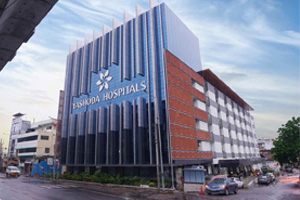
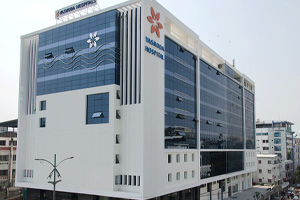
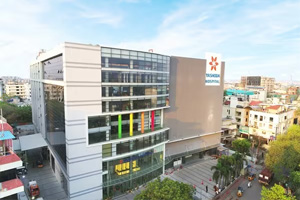
Our Locations

  • Malakpet Location

    Malakpet

  • Somajiguda Location

    Somajiguda

  • Secunderabad Location

    Secunderabad

  • Hitec City Location

    Hitec City

FAQ's

Yes, Keratoconus can turn serious if left untreated. Keratoconus causes the cornea to become thin and bulge into a cone shape. This leads to disturbed vision. In the early stages of keratoconus disease, it is manageable through glasses or contact lenses. But advanced stages can significantly affect the day-to-day life of an individual.

There is no permanent remedy for Keratoconus disease, but it can be effectively controlled. Therapies like corneal collagen cross-linking can stop the progression of the disease, while lenses or surgery can improve the overall vision.

Very rarely, Keratoconus disease does not normally lead to an individual becoming completely blind, but it can cause serious visual impairment if not treated. Even in advanced cases of keratoconus, treatments like corneal transplant can restore an individual’s vision.

If the patient is experiencing increased blurry or distorted vision, Frequent changes in the power of glasses, or increased sensitivity to light, double or ghost images confirm keratoconus progression, which maps cornea shape over time.

Keratoconus is a relatively uncommon disease, but it is not rare. It affects 1 in 1,000 to 2,000 People, though newer studies suggest it might be more common due to better diagnosis.

Most Keratoconus surgeries are usually quick. Treatments like corneal cross-linking or ring insertion normally take 15 to 60 minutes per eye, while advanced methods like corneal transplant might take 1 to 2 hours.

Recovery from keratoconus surgery depends on the procedure. Mild treatments heal within a few days to 2 weeks, but vision might take 1 to 3 months to stabilize. In corneal transplant cases, full recovery might take 6-12 months.

The success rate of keratoconus surgery is normally high. Methods like cross-linking have about 90% to 95% success in stopping progression, while corneal transplants show 85% to 95% long-term success with significant improvement in vision.

Terms and conditions

All the cost and surgery information provided on the website is primarily to enable the users to obtain a better understanding of Yashoda Hospitals and the medical services provided by it, and the information thereby provided is subject to changes and modifications as and when required without any prior notice. Actual cost of the surgery details would be confirmed at the hospital after doctor consultation only.

Yashoda Hospitals does not represent or endorse the accuracy, completeness or reliability of any information displayed, uploaded or distributed through the website. The usage of the content implies that you acknowledge that any reliance upon any such statement or information shall be at your own risk. Yashoda Hospitals does not resume any responsibility related to the accuracy of information provided or made available. None of the individual developers, system operators, third-party contributors and management of Yashoda Hospitals or anyone else connected to Yashoda Hospitals can be held responsible for the results or consequences incurred due to any reliance being placed or adopt any of the information presented on this website.

Book an appointment
in 2 minutes