

Select Page

Get a Free Second Opinion

NCV/EMG Cost In Hyderabad

  • – Providing 30+ years of world-class healthcare to diverse communities.
  • – 600+ specialists across 62 medical specialties providing expert care
  • – Advanced technology and procedures for top-quality patient care
  • – Minimally invasive procedures for faster recovery and comfort
  • – Advanced surgical suites and ICUs for critical care
Factors Affecting

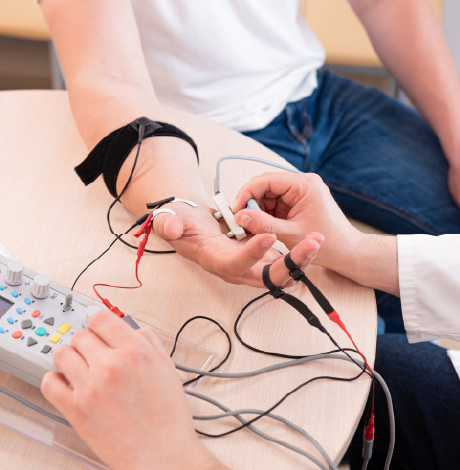
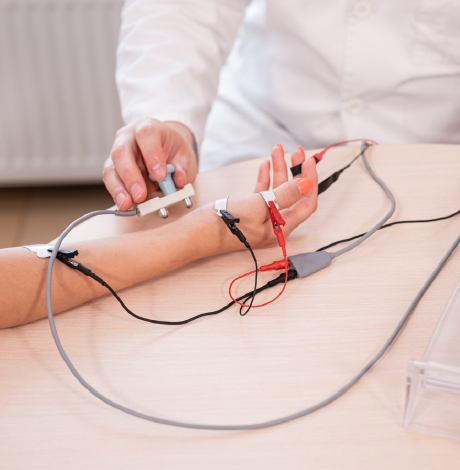
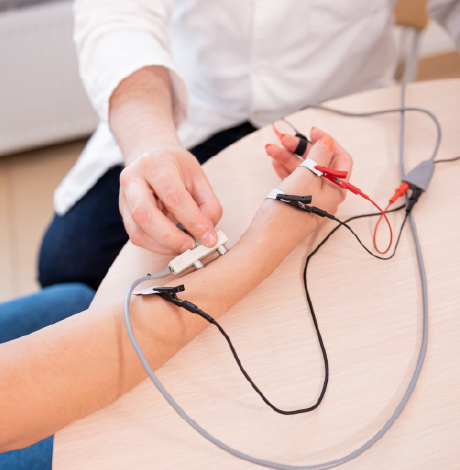
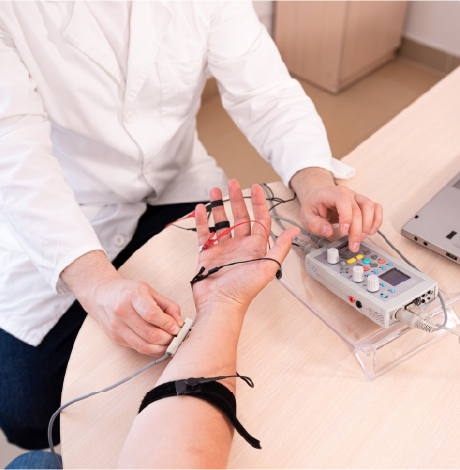
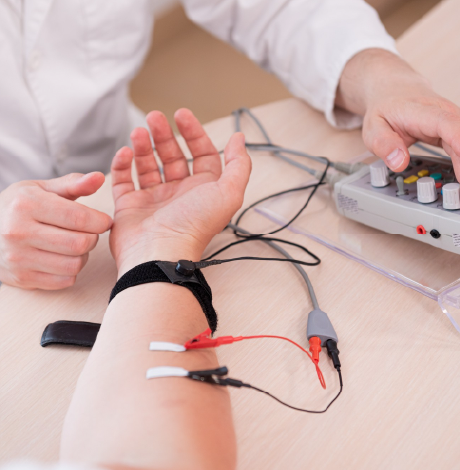
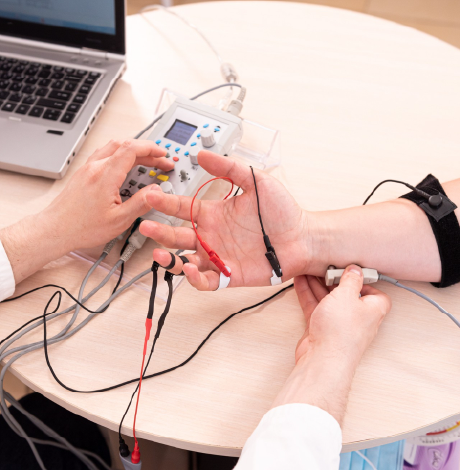
NCV/EMG (Nerve Conduction Velocity and Electromyography) are specialised diagnostic tests used to study how well the nerves and muscles in the body are functioning. The NCV test evaluates the speed and strength of electrical signals as they travel through peripheral nerves. During the test, small surface electrodes are placed on the skin, and gentle electrical impulses are applied to stimulate the nerve. The responses are recorded to detect nerve damage, compression, or reduced signal transmission, which can occur in conditions such as peripheral neuropathy, nerve entrapment syndromes, or spinal nerve root problems. The test is generally well tolerated, takes about 30 to 60 minutes, and causes only brief, mild discomfort.

The EMG test complements NCV by examining the electrical activity produced by muscles. In this test, an excellent needle electrode is inserted into selected muscles to record signals when the muscle is at rest and during voluntary movement. This helps determine whether symptoms like muscle weakness, cramps, pain, or wasting are due to a muscle disorder, nerve injury, or a problem in the communication between nerves and muscles. When performed together, NCV and EMG provide a detailed and reliable assessment of neuromuscular health, enabling doctors to accurately identify the cause of symptoms and guide appropriate treatment or further evaluation.
What is the Cost of Nerve Conduction Velocity and Electromyography tests in Hyderabad?


NCV/EMG (Nerve Conduction Velocity and Electromyography) tests in Hyderabad are offered in various formats, depending on the number of nerves and muscles tested, the body regions evaluated, and whether a NCV study alone or a combined NCV and EMG study is required. The cost of NCV/EMG in Hyderabad varies depending on test complexity, duration, and the diagnostic facility.

Factors Affecting
Factors Affecting

What are the indications in which NCV/EMG is used?

NCV/EMG plays a crucial role in pinpointing the exact cause of neuromuscular symptoms, distinguishing nerve disorders from muscle diseases, assessing severity, and guiding precise treatment decisions, rehabilitation plans, and long-term care.

  1. Persistent numbness, tingling, burning, or loss of sensation in the hands or feet
    NCV/EMG helps determine whether these sensory symptoms are caused by damaged peripheral nerves, reduced nerve signal transmission, or compression along the nerve pathway. It is particularly helpful when symptoms are long-standing, progressive, or significantly affecting daily activities.
  2. Muscle weakness, muscle wasting, or difficulty in lifting, gripping, or walking
    When muscles lose strength or shrink over time, NCV/EMG helps identify whether the problem originates from nerve damage, muscle disease, or impaired nerve–muscle communication. This distinction is essential for choosing the correct treatment and rehabilitation approach.
  3. Suspected peripheral neuropathy, including diabetic or toxic neuropathy
    In conditions like diabetes, vitamin deficiencies, medication toxicity, or alcohol-related nerve damage, NCV/EMG evaluates the severity, distribution, and type of nerve involvement. It also helps monitor disease progression and response to treatment.
  4. Nerve compression or entrapment syndromes (carpal tunnel, cubital tunnel, tarsal tunnel)
    NCV/EMG accurately detects nerve compression at specific anatomical sites by measuring slowed nerve conduction across the affected area. This helps confirm diagnosis, assess severity, and guide decisions between conservative management and surgery.
  5. Radiculopathy due to cervical or lumbar spine problems
    When neck or low back problems cause pain, numbness, or weakness radiating into the arms or legs, NCV/EMG helps identify nerve root involvement. It differentiates spinal nerve compression from peripheral nerve or muscle disorders.
  6. Sciatica and other nerve root disorders
    In patients with leg pain radiating from the lower back, NCV/EMG evaluates whether symptoms are due to true sciatic nerve involvement or other nerve root conditions. This supports accurate diagnosis and targeted spine or pain management.
  7. Muscle diseases (myopathies)
    For patients with muscle pain, stiffness, cramps, or reduced strength, EMG identifies abnormal muscle electrical patterns. This helps distinguish muscle disorders from nerve-related causes and aids in diagnosing inflammatory, genetic, or metabolic myopathies.
  8. Neuromuscular junction disorders such as myasthenia gravis
    Specialised EMG techniques help detect impaired signal transmission between nerves and muscles. This is critical in diagnosing conditions that cause muscle fatigue, fluctuating weakness, and difficulty with repetitive movements.
  9. Nerve injuries following trauma, surgery, or prolonged pressure
    NCV/EMG assesses the extent of nerve damage, whether the nerve is healing, and the likelihood of recovery. It is valuable in planning rehabilitation, surgical repair, or long-term management after injury.
  10. Evaluation of unexplained muscle pain, cramps, or twitching
    When routine tests are normal, EMG helps detect subtle nerve or muscle abnormalities that may explain involuntary muscle activity, spasms, or persistent discomfort.

Procedure of NCV/EMG (Nerve Conduction Velocity & Electromyography)

  1. Preparation Before the Test
    Before the NCV/EMG procedure, the doctor reviews your symptoms, medical history, and any previous reports. You may be asked to avoid applying oils or lotions on the skin on the day of the test, as they can interfere with electrode contact. No fasting is usually required, and most regular medications can be continued unless specifically advised otherwise.
  2. NCV (Nerve Conduction Velocity) Test Procedure
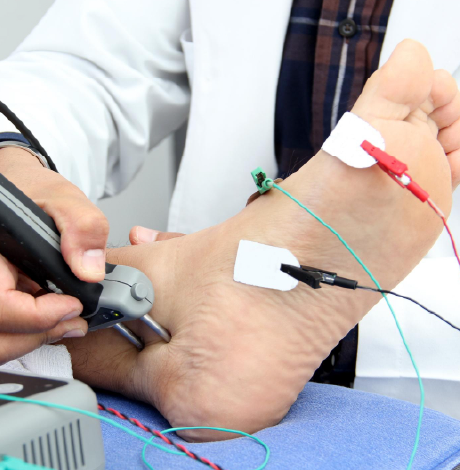
    During the NCV test, small surface electrodes are placed on the skin over specific nerves and muscles. A mild, brief electrical stimulus is delivered to the nerve, and the response is recorded on a machine. This measures how fast and how well electrical signals travel through the nerve. The sensation feels like a quick tingling or tapping and lasts only a few seconds. This part of the test helps identify nerve damage, compression, or slowing of nerve signals, and usually takes 30–60 minutes, depending on the number of nerves tested.
  3. EMG (Electromyography) Test Procedure
    After the NCV test, the EMG procedure is performed to evaluate muscle activity. A very fine, sterile needle electrode is gently inserted into selected muscles. Electrical activity is recorded while the muscle is at rest and during slight contraction. You may feel mild discomfort or pressure during needle insertion, but it is generally well tolerated. This step helps determine whether muscle weakness or pain is due to muscle disease, nerve injury, or problems at the nerve–muscle junction.
  4. After the Procedure
    Once the NCV/EMG test is completed, the electrodes are removed, and you can return to normal activities immediately. Mild muscle soreness or tenderness at needle sites may occur but usually resolves within a few hours to a day. The test results are interpreted by a specialist and used to guide diagnosis, treatment planning, or further investigations.

The NCV/EMG procedure is a safe, structured, and highly informative test that provides a detailed assessment of nerve function and muscle health. By combining nerve conduction studies with electromyography, doctors can accurately identify the cause of numbness, weakness, pain, or muscle abnormalities and plan appropriate treatment.

Factors Affecting
Factors Affecting

Types of NCV/EMG:

Types of NCV (Nerve Conduction Velocity Test)

  1. Motor Nerve Conduction Study
    This test checks how effectively motor nerves transmit signals to muscles. It is commonly used to evaluate muscle weakness, reduced movement, and conditions affecting motor nerve pathways.
  2. Sensory Nerve Conduction Study
    This study measures the function of sensory nerves responsible for touch and sensation. It is helpful for patients experiencing tingling, numbness, burning sensations, or loss of feeling in the hands or feet.
  3. Mixed Nerve Conduction Study
    Mixed nerve studies assess nerves that carry both sensory and motor signals. These are useful in diagnosing complex nerve disorders and certain nerve compression conditions.

F-Wave and H-Reflex Studies
These advanced NCV tests evaluate nerve conduction over longer distances and assess nerve roots. They are often used in cases of radiculopathy, sciatica, and proximal nerve involvement.

Types of EMG (Electromyography Test)

  1. Needle EMG
    Needle EMG is the most widely used electromyography test. A fine needle electrode records muscle activity at rest and during movement, helping diagnose muscle disorders, nerve injuries, and neuromuscular diseases.
  2. Surface EMG
    Surface EMG uses electrodes placed on the skin to record muscle activity without needles. It is mainly used for movement analysis, rehabilitation monitoring, and muscle function assessment.
  3. Single-Fibre EMG
    Single-fibre EMG is a specialised technique that evaluates the communication between individual nerve fibres and muscle fibres. It is especially useful in diagnosing neuromuscular junction disorders such as myasthenia gravis.

Using the appropriate type of NCV or EMG test allows doctors to precisely identify whether symptoms are due to nerve damage, muscle disease, nerve compression, or impaired nerve–muscle signaling. This targeted approach ensures accurate diagnosis, effective treatment planning, and better patient outcomes.

Side Effects of EMG:

Electromyography (EMG) is a safe and commonly performed diagnostic test, and most people experience little to no side effects. Any effects are usually mild, temporary, and resolve on their own.

Common and Mild Side Effects

  • Temporary discomfort or pain at the needle insertion site during the test
  • Mild muscle soreness or tenderness after the procedure, lasting a few hours to a day
  • Minor bruising or redness at the area where the needle was inserted

Less Common Side Effects

  • Slight swelling at the needle site
  • Fatigue in the tested muscles, especially if multiple muscles are examined

Rare Side Effects

  • Infection at the needle site (very rare, as sterile needles are used)
  • Minor bleeding, particularly in people on blood-thinning medications
  • Increased pain for a short duration in sensitive muscles

After the Test – What to Expect

Most patients can resume normal activities immediately after an EMG test. Applying a warm compress or gently stretching the muscle may help relieve soreness. Any discomfort usually settles within 24 hours.

When to Contact a Doctor
You should contact your doctor if you notice:

  • Persistent pain or swelling lasting more than a day
  • Signs of infection, such as increasing redness, warmth, or discharge
  • Excessive bruising or bleeding

The side effects of EMG are generally mild and short-lived. EMG is considered a low-risk diagnostic procedure that provides valuable information about muscle and nerve function, helping guide accurate diagnosis and treatment planning.

Side Effects of NCV (Nerve Conduction Velocity Test):

  • Brief tingling or mild electric shock sensation during nerve stimulation
  • Temporary discomfort at the time of the test
  • Mild redness or skin irritation at electrode placement sites
  • Slight tenderness over the tested area for a short duration
  • No long-term side effects or nerve damage
  • Patients can return to normal activities immediately after the test
Factors Affecting
Factors Affecting

Benefits of the NCV/EMG Test:

  • Identifies nerve vs muscle problems
  • Detects conditions early
  • Confirms nerve compression and neuropathy
  • Measures the severity of damage
  • Guides correct treatment choice.
  • Avoids unnecessary procedures
  • Monitors recovery and progression
  • Safe outpatient test with no downtime

Enquire now

Factors Influencing The Cost of NCV/EMG Test:

  • Number of nerves or muscles tested
  • NCV alone vs combined NCV + EMG
  • Single-limb vs multi-limb testing
  • Complexity and duration of symptoms
  • Specialist’s experience and expertise
  • Technology and equipment quality
  • Type and location of the diagnostic centre
  • Need for repeat or follow-up testing.

The overall cost of an NCV/EMG test varies based on individual diagnostic needs and the level of evaluation required.

Factors Affecting

Making An Informed Decision on the NCV/EMG Test:

Choosing to undergo an NCV/EMG test is an important step when dealing with ongoing nerve- or muscle-related symptoms. Before proceeding, it is helpful to understand why the test has been recommended, what symptoms it aims to evaluate, and how the results may influence your treatment plan. Discussing your medical history, current medications, and symptom duration with your doctor ensures the test is tailored to your specific condition and avoids unnecessary investigations.

It is also important to be aware of what the procedure involves, including the level of comfort, safety, and expected outcomes. NCV/EMG is a reliable and low-risk diagnostic tool that provides clear information about nerve function and muscle health, often preventing delays in diagnosis or inappropriate treatments. By understanding the purpose, benefits, possible discomfort, and cost considerations, patients can confidently make an informed decision and actively participate in planning their care.

Insurance Assistance for NCV/EMG treatment

  • Transparent Pricing
  • Cost Estimation
  • Billing Support
  • Insurance & TPA Assistance

Get Insurance Assistance

Factors Affecting
Factors Affecting

Free Second Opinion for NCV/EMG treatment

If you’ve been advised of the NCV/EMG treatment, get a free second opinion from our experts.

Our experienced surgeons will review your case, providing valuable insights and recommendations to help you make informed decisions about your health.

Get Free Second Opinion

Why Choose Yashoda Hospitals

Yashoda Hospitals in Hyderabad, India, is a leading option for KUB due to its top-notch team, cutting-edge technology, and comprehensive care.

blank
Comprehensive Care

Our patients trust Yashoda Hospitals for KUB treatment because its comprehensive care focuses on personalized treatment plans, minimizing complications and promoting faster recovery.

blank
Expert Doctors

Our team of experienced general surgeons delivers precise surgical care, fostering patient confidence in achieving successful outcomes.

blank
Cutting-Edge Technology

The Centre for General Surgery at Yashoda Hospitals offers state-of-the-art facilities and the latest technologies.

blank
Clinical Excellence

Yashoda Hospitals is recognised as the Best Hospital for KUB treatment Cost In India , offering exceptional surgical care services.

All major insurance are accepted for
NCV/EMG Cost In Hyderabad Treatment


Our Locations

  • Malakpet Location

    Malakpet

  • Somajiguda Location

    Somajiguda

  • Secunderabad Location

    Secunderabad

  • Hitec City Location

    Hitec City

FAQ's

It is recommended to identify the cause of symptoms such as numbness, tingling, muscle weakness, pain, or muscle twitching.

The test usually takes between 45 and 90 minutes, depending on the number of nerves and muscles examined.

You should avoid applying oils or lotions to the skin before the test. No fasting is required in most cases.

Side effects are minimal and temporary, such as mild discomfort, soreness, or skin redness at the test sites.

Yes, NCV/EMG is a safe procedure with no long-term complications when performed by trained specialists.

Yes, you can return to your routine activities immediately after the test.

The test is conducted and interpreted by a trained neurologist or neurophysiology specialist.

Results are often available the same day or within a short time after analysis by the specialist.

It helps diagnose nerve compression, peripheral neuropathy, radiculopathy, muscle diseases, and neuromuscular junction disorders.

Yes, the test can be safely performed in elderly patients with appropriate clinical assessment.

Yes, it is useful in identifying early or subtle nerve abnormalities before they progress.

Repeat tests may be advised to monitor recovery or disease progression, depending on your condition.

Coverage varies by policy; it is best to check with your insurance provider for specific details.

Terms and conditions

All the cost and surgery information provided on the website is primarily to enable the users to obtain a better understanding of Yashoda Hospitals and the medical services provided by it, and the information thereby provided is subject to changes and modifications as and when required without any prior notice. Actual cost of the surgery details would be confirmed at the hospital after doctor consultation only.

Yashoda Hospitals does not represent or endorse the accuracy, completeness or reliability of any information displayed, uploaded or distributed through the website. The usage of the content implies that you acknowledge that any reliance upon any such statement or information shall be at your own risk. Yashoda Hospitals does not resume any responsibility related to the accuracy of information provided or made available. None of the individual developers, system operators, third-party contributors and management of Yashoda Hospitals or anyone else connected to Yashoda Hospitals can be held responsible for the results or consequences incurred due to any reliance being placed or adopt any of the information presented on this website.