Select Page

Get a Free Second Opinion

Laser Lithotripsy Operation Cost In India

  • – Providing 30+ years of world-class healthcare to diverse communities.
  • – 600+ specialists across 62 medical specialties providing expert care
  • – Advanced technology and procedures for top-quality patient care
  • – Minimally invasive procedures for faster recovery and comfort
  • – Advanced surgical suites and ICUs for critical care
Factors Affecting

Treatment of Kidney Stones With Laser Lithotripsy at Yashoda Hospital

Kidney stones are hard, solid masses of mineral and salt deposits that are formed in the kidneys and cause intense pain, bleeding, and blockage of the urinary tract if they are too big in size and do not get passed naturally in urine. Laser lithotripsy is a minimally invasive technique that uses a laser to break up the stones in the urinary tract into smaller fragments, which are then naturally excreted by urine. A urologist is a specialist who performs the laser lithotripsy procedure by introducing a thin, flexible scope with a laser fiber fitted with a camera through the urethra. Laser lithotripsy is started by giving general anesthesia to the patient, followed by introducing the scope for locating the stones, and then using the same fiber, the urologist targets laser light and breaks down kidney stones into small fragments or fine powder. The stones are then removed by either using a small basket-type instrument or allowing them to pass through the urine, generally over the course of time. A stent is also usually placed at the end of surgery so that smaller fragments do not accumulate and do not block the urine passage. This stent is removed in a few days. Laser lithotripsy is an outpatient procedure, and the patient usually is discharged from the hospital the same day. The two most common types of laser lights used for the laser lithotripsy procedure are Holmium: YAG (HO: YAG) laser and Thulium fiber laser (TFL).

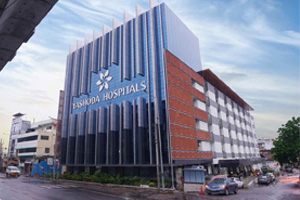
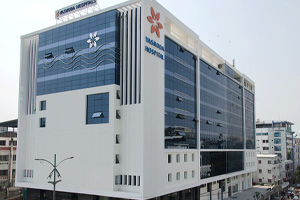
Yashoda Hospital is a good choice for the laser lithotripsy procedure due to its advanced 100-watt laser technology, which enables urologists to conduct bloodless surgeries for kidney stones of any size or hardness. Yashoda Hospitals boasts an experienced team of urologists and nephrologists, equipped with cutting-edge technology, including world-class lithotripters, and is committed to delivering high-quality, compassionate care at competitive rates.

What is the cost of Laser Lithotripsy in India?

The cost of laser lithotripsy varies depending on factors like the city, the hospital, and the size, location of the kidney stones. But the method used to access the stone is what influences the cost variation the most. The cost for laser lithotripsy varies from

Enquire now

We understand that every patient’s needs are unique. For a precise Laser Lithotripsy Operation cost estimate, call us at +918065906165

Factors Affecting
Factors Affecting

Who needs the Laser Lithotripsy procedure?

  • Patients with kidney stones larger than 1 centimeter are unlikely to pass them through the urine.
  • Stones that are present in the deeper and complex parts of the urinary tract, especially the lower parts of the ureter.
  • Laser lithotripsy is especially done for kidney stones that are known to cause severe pain, blockages, and urinary tract infections.
  • Patients whose kidney stones have not responded to other techniques of kidney stone removal, such as extracorporeal shock wave lithotripsy, are candidates for laser lithotripsy.
  • Laser lithotripsy is also an effective technique in breaking up kidney stones of different types that are harder and resistant to other treatment methods.

Types of treatments for kidney stones

  • Kidney stone treatments can be categorized into options for managing the stones while they pass, procedures to break up or remove the stone, and preventive measures.
  • Conservative management for small stones is generally used to treat small stones that are expected to pass on their own. These include drinking plenty of fluids, pain relievers, medical expulsion therapy (alpha-blockers), and alkalinizing agents.
  • Procedures to remove or break up stones are used for the treatment of larger stones, causing a blockage, severe pain, or infection. Non-invasive method in this category include extracorporeal shock wave lithotripsy (ESWL), and minimally invasive methods include ureteroscopy (URS) and percutaneous nephrolithotomy (PCNL).
  • Other surgical options include laparoscopic or open surgery (pyelolithotomy/ureterolithotomy) and Hyperparathyroidism surgery.

Enquire now

Factors Affecting
Factors Affecting

Factors that influence Laser Lithotripsy cost in India

The cost of laser lithotripsy is influenced by a combination of factors related to the patient’s condition, the healthcare provider and facility, and geographical location. Key factors are listed below, namely.

  • Characteristics of stone
  • Severity of condition
  • Need for additional procedures.
  • Type of laser lithotripsy
  • Technology used
  • Disposable equipment
  • Insurance coverage

Enquire now

Types of Laser Lithotripsy treatment

Laser lithotripsy techniques are varied depending on the laser technology that is used and the surgical strategy that is employed to break up the stone. The two main types of lasers are Holmium: YAG (HO: YAG) and the newer Thulium fiber laser (TSL).

  • Holmium: YAG (HO: YAG) is the gold-standard laser for lithotripsy and is effective on stones of all compositions. Its wavelength is strongly absorbed by water, which produces a cavitation bubble that fragments the stone.
  • The thulium fiber laser (TSL) is the most recent innovation in laser lithotripsy. It is a more effective laser technique in comparison to Holmium: YAG (HO: YAG) due to its wavelength and high frequency. Also, it has higher absorption in water, is deliverable through smaller fibers, and requires a smaller console.

The choice of the right technique depends on several factors, like the composition of the stone, its location and size, the preference of the surgeon, and the expected result.

Factors Affecting
Factors Affecting

Post-operative care for Laser Lithotripsy

  • Post-operative care for laser lithotripsy focuses on hydration, pain management, and avoiding any strenuous activity while any remaining stone fragments pass. Patients usually return to normal activities in a few days, but a full recovery takes weeks.
  • Immediate recovery involves a hospital stay for one day, which makes laser lithotripsy an outpatient procedure.
  • The patient may feel the effects of general anesthesia and should be driven home.
  • The initial diet involves sticking to clear liquids before taking up the normal diet.
  • The patient is given a strainer to collect the stones, which can be later sent to the lab for analysis.

Benefits of Laser Lithotripsy

  • High success rate
  • No incisions
  • Less pain and discomfort
  • Decreased risk of infection
  • Treats all types of kidney stones and sizes
  • Decreased obstruction of fragments
  • Quick return to daily activities
  • Less downtime
  • Daycare procedure
Factors Affecting

Make an Informed decision about the Laser Lithotripsy procedure in India

To make an informed decision about laser lithotripsy in India, the patient should first clearly understand the procedure, compare it to other treatment options, consider the potential risks and benefits, and then consider the cost and hospital options. Consultation with a qualified urologist for a personalized checkup is also very important before undergoing the procedure.

Yashoda Hospitals is a strong contender for the laser lithotripsy procedure in India due to its combination of advanced technology, specialized urological expertise, and focus on minimally invasive procedures. The hospital’s specialized urology department is expertly trained and equipped to handle different types of kidney stones with a great emphasis on a high success rate.

Enquire now

Insurance Assistance for Laser Lithotripsy Surgery

  • Transparent Pricing
  • Cost Estimation
  • Billing Support
  • Insurance & TPA Assistance

Get Insurance Assistance

Factors Affecting
Factors Affecting

Free Second Opinion for Laser Lithotripsy Surgery

If you’ve been advised of the Laser Lithotripsy Surgery, get a free second opinion from our experts.

Our experienced surgeons will review your case, providing valuable insights and recommendations to help you make informed decisions about your health.

Get Free Second Opinion

Why Choose Yashoda Hospitals

Yashoda Hospitals is committed to providing world-class treatment for patients from across the globe. With the unique combination of state-of-the-art technology, intuitive care, and clinical excellence, we are the healthcare destination for thousands of international patients in India.

blank
Comprehensive Care

On the journey to good health, we understand that it is important for you to feel at home. We plan out all aspects of your trip.

blank
Expert Doctors

Experienced specialists perform non-invasive and minimally invasive surgeries to provide the best treatment for international patients.

blank
Cutting-Edge Technology

Our hospitals are equipped with advanced technology to perform a wide range of procedures and treatments.

blank
Clinical Excellence

We deliver excellence by delivering quick and efficient healthcare and through pioneering research that helps all our future.patients.

All major insurance are accepted for
Laser Lithotripsy Operation Cost In India Treatment


Our Locations

  • Malakpet Location

    Malakpet

  • Somajiguda Location

    Somajiguda

  • Secunderabad Location

    Secunderabad

  • Hitec City Location

    Hitec City

FAQ's

No, laser lithotripsy is not a painful procedure because it is performed under anesthesia, which means the patient is asleep and does not feel any pain during the procedure. But the patient feels some discomfort or mild pain after the procedure, especially with small stone fragments passing through the urinary tract. Pain management after laser lithotripsy is possible with the medicines prescribed by a specialist after the procedure.

After the procedure, the patient should expect to experience some discomfort, including a burning sensation during urination, and may notice blood in the urine for a few days to weeks, which is considered normal.

Laser lithotripsy typically takes between 30 minutes and 2 hours, but this duration can vary depending on the stone's size, location, and the specific procedure used. The ureteroscopy with laser lithotripsy is often an outpatient procedure, allowing the patients to go home on the same day.

Laser lithotripsy and extracorporeal shock wave lithotripsy (ESWL) are both procedures to break up kidney stones, but they differ notably in technique, invasiveness, and effectiveness for certain stones.

Laser lithotripsy is a highly successful procedure, with an overall stone clearance rate ranging from 90% to over 96%. The success of laser lithotripsy depends on the location, size, and type of stone, with a high success rate generally seen for lower ureteral stones and smaller stones.

No, a ureteral stent is not always necessary, and the requirement normally depends on the complexity of the procedure and the individual patient factors. Stents are typically used in complex cases, and in cases that are not complicated, they can be omitted to reduce the discomfort of the patient.

Terms and conditions

All the cost and surgery information provided on the website is primarily to enable the users to obtain a better understanding of Yashoda Hospitals and the medical services provided by it, and the information thereby provided is subject to changes and modifications as and when required without any prior notice. Actual cost of the surgery details would be confirmed at the hospital after doctor consultation only.

Yashoda Hospitals does not represent or endorse the accuracy, completeness or reliability of any information displayed, uploaded or distributed through the website. The usage of the content implies that you acknowledge that any reliance upon any such statement or information shall be at your own risk. Yashoda Hospitals does not resume any responsibility related to the accuracy of information provided or made available. None of the individual developers, system operators, third-party contributors and management of Yashoda Hospitals or anyone else connected to Yashoda Hospitals can be held responsible for the results or consequences incurred due to any reliance being placed or adopt any of the information presented on this website.