


Widal Diagnostic Test
The Widal diagnostic evaluation is a frequently utilized blood evaluation for the diagnosis of enteric fever, also known as typhoid fever. Typhoid fever is caused by the bacterium Salmonella typhi. It works by the identification of specific O and H agglutinins antibodies (a component of the body’s immune system that circulates in the blood, identifies foreign substances like bacteria and viruses, and neutralizes them), that are produced by the body as an answer to the infection. The Widal examination plays a role in supporting the diagnosis of typhoid, especially in areas where typhoid fever is prevalent. The Widal test is based on an agglutination reaction, where antibodies in the patient’s serum react with antigens in the test reagent, which leads to visual clumping. This reaction assists in indicating whether the body has been exposed to the bacteria. Nevertheless, the Widal test interpretation needs careful consideration as levels of antibody might vary based on previous infections, vaccinations, or endemic exposure. Although more modern diagnostic procedures are available today, the Widal test remains widely utilized due to its simplicity, cost-effectiveness, and accessibility. It is especially useful in areas where resources are limited. A proper understanding of the Widal test and its outcomes is vital to ensure precise clinical decisions and avoid misdiagnosis.
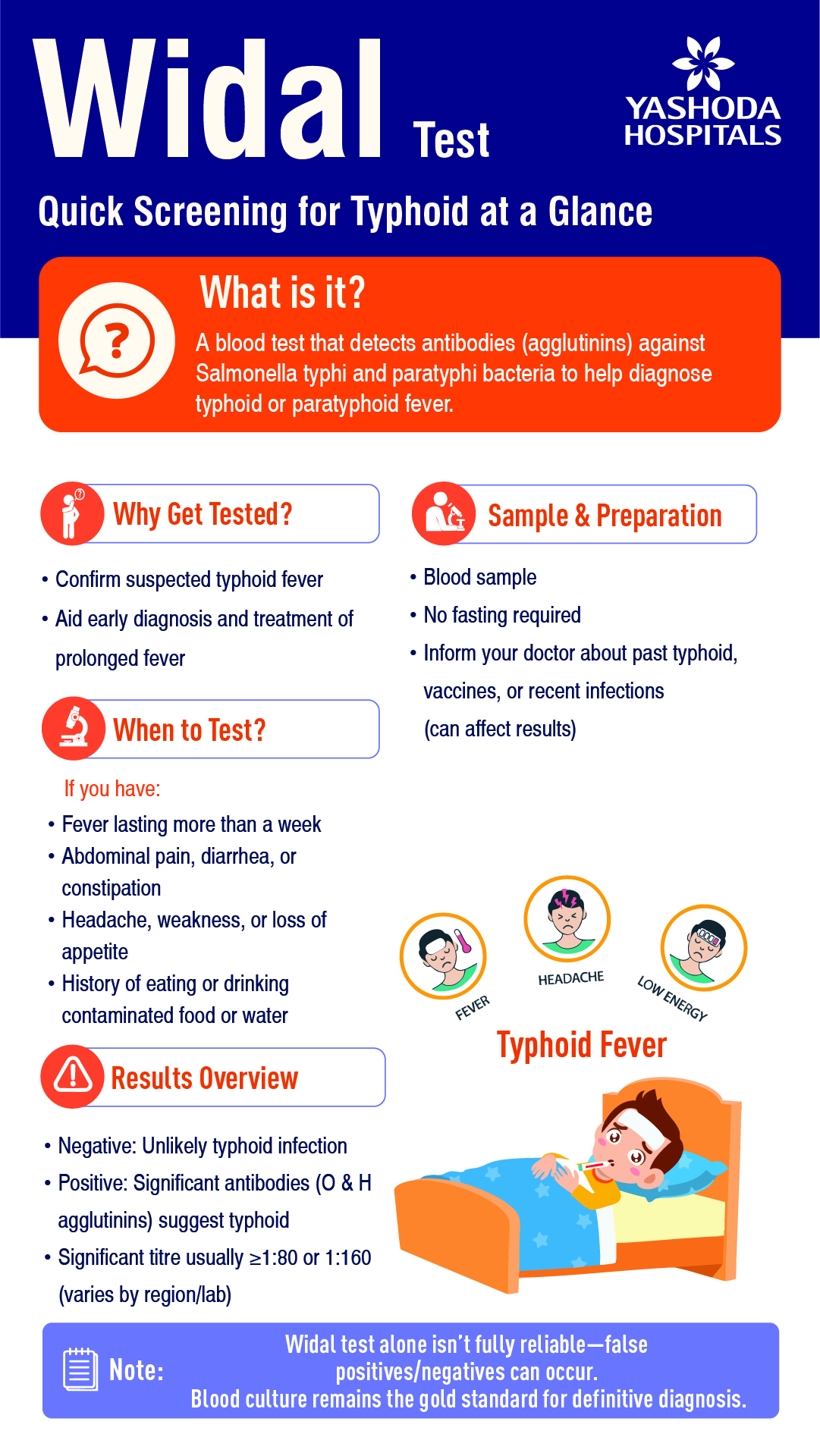
Uses of the Widal Test
- The Widal test is utilized to detect antibodies against Salmonella typhi in the blood.
- The test assists in supporting the diagnosis of typhoid fever.
- The Widal test is utilized as a screening tool in suspected enteric fever cases.
- It assists in observing the progression of infection.
- It assists in epidemiological studies in the endemic regions.
Indications of the Widal Test
- The Widal test is suggested for patients with prolonged fever.
- It is especially advised when typhoid fever is suspected.
- It is also recommended in cases of headache, weakness, and abdominal discomfort.
- It is also used when the individual experiences signs like loss of appetite and fatigue.
- The Widal test is also recommended in endemic areas with suspected typhoid infection.
Preparation Before The Widal Test
- No special fasting is normally required for the Widal test.
- The patient should follow the specific instructions given by the doctor before undergoing a Widal test.
- The patient should inform healthcare professionals and their doctor of all specific medications they are taking.
- The patient should avoid self-medication before testing.
- The patient should stay hydrated before undergoing a Widal test.
Procedure of the Widal Test
- A blood sample is collected from a vein in the arm.
- After collection, the sample is sent to a laboratory for analysis.
- The serum is then separated from the blood sample.
- The separated serum is then mixed with specific antigens.
- Agglutination (Clumping) is observed and measured.
- Outcomes are reported as titers, that is, a measure of the level of antibodies in a person’s serum.
Benefits of the Widal Test
- The Widal test is a simple and cost-effective evaluation.
- It assists in the early detection of typhoid fever.
- It is widely available in most laboratories.
- Along with the diagnosis of enteric fever, the Widal test provides supportive diagnostic information.
- The Widal test is very useful in settings where there are limited resources.
Factors Influencing Widal Test Results
- If the individual has suffered previously from typhoid infection.
- The vaccination history of the individual also influences the results of the Widal test.
- If the individual has other cross-reacting infections along with the typhoid fever.
- The timing of the Widal test also influences its results (early or late stage).
- If the individual has used antibiotics before getting a Widal test.
- Variations in the laboratory technique also influences the result.
- Endemic background antibody levels are the baseline antibodies present in individuals living in typhoid-affected areas due to previous exposure, even without the current infection.
Types Of Widal Tests
Slide Agglutination Test: A quick screening method that provides quick results too.
Tube Agglutination Test: A more quantitative and dependable method to measure the antibody titers.
Interpretation of Widal Test Results
Normal/Negative: If the Widal test has no significant antibody titers detected.
Low Titers: Might indicate past infection or early stage of typhoid disease.
Significant Titers: Suggests active or recent typhoid infection.
Rising Titers: Strong evidence of ongoing typhoid infection when tested over time.
Reference Range
O Antigen (TO): Less than 1:80 is considered normal.
H antigen (TH): Less than 1:80 is considered normal.
Significant Values
≥ 1:160 might indicate active or recent infection, depending on local endemic levels.
Side Effects of the Widal Test:
- Slight pain or discomfort at the site of needle insertion.
- Slight bruising around the puncture area.
- Minor bleeding after blood sample collection.
- Dizziness or lightheadedness in some individuals.
- Rare chances of infection at the site of injection.
- Occasional fainting in highly sensitive individuals.
- Small hematoma (blood collection under the skin).







 Appointment
 Second Opinion
 Live Chat
 Call
Call More
More