


SGOT Test
The Serum Glutamic-Oxaloacetic Transaminase (SGOT) evaluation, also termed as Aspartate Aminotransferase (AST) evaluation, is a vital blood evaluation utilized to examine the health of multiple organs, mainly the liver, heart, and muscles. SGOT is an enzyme naturally present inside cells of these tissues, where it exhibits a role in the metabolism of amino acids. Under normal physiological conditions, only a small amount of this enzyme circulates in the bloodstream. Nevertheless, when cells from these organs are damaged due to disease, injury, or inflammation, SGOT is released into the blood, causing its levels to increase. Even though the SGOT test is mainly associated with the health of the liver, it is not specific to the liver, as SGOT levels can increase in cases of heart attack, muscle injuries, or any other systemic diseases. As a consequence, SGOT is mostly interpreted along with other evaluations like SGPT (alt), Alkaline phosphatase, and bilirubin to provide a more precise clinical picture. This combined approach assists in differentiating between liver-related and non-liver-related causes of SGOT elevation. The SGOT evaluation is simple, minimally invasive, and commonly included in regular health checkups or liver function panels. It exhibits an important role in early diagnosis and observation of various medical conditions. Proper interpretation of SGOT levels, in correlation with signs of diseases and other tests, allows doctors to evaluate organ function and successfully guide correct treatment decisions.
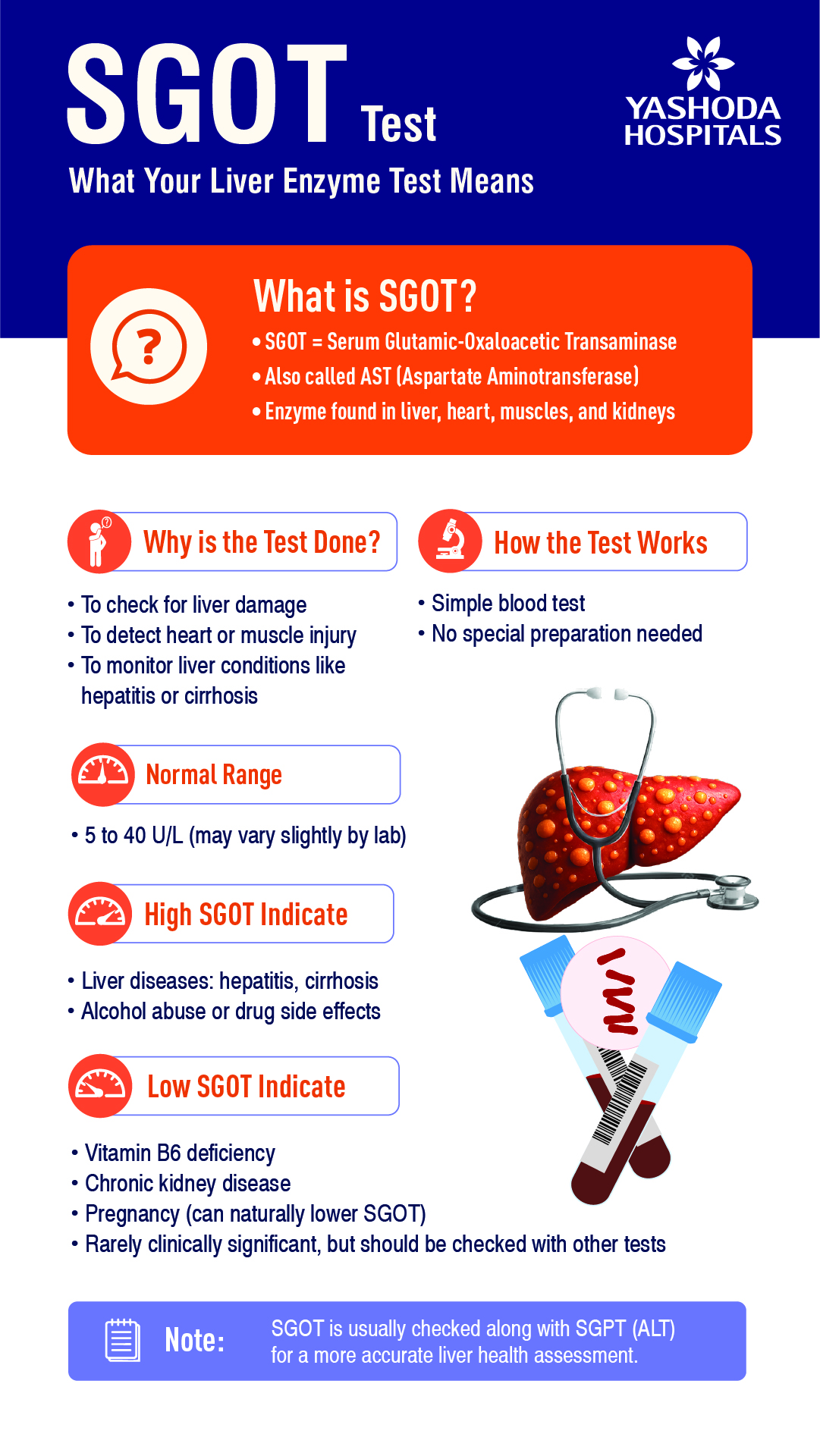
Uses of SGOT Test:
- It is utilized to quantify the level of SGOT enzyme in the blood to evaluate tissue health.
- It assists in diagnosing liver cell injury caused by infections, toxins, or chronic diseases.
- It is utilized to examine the damage to the heart muscle, usually after a cardiac event.
- It helps in diagnosing muscle-related diseases or injuries.
- It is also utilized to observe the progression of the disease and response to treatment in liver diseases.
- It forms a vital part of routine liver evaluation testing panels.
Indications of SGOT Test
- SGOT evaluation in patients is suggested if symptoms like jaundice, tiredness, nausea, or abdominal pain are observed.
- It is suggested when liver conditions like hepatitis or cirrhosis are suspected.
- It is also recommended for patients with a history of alcohol use or drug toxicity.
- It is also recommended for patients with suspected heart injury or muscle injury.
- It is also suggested for observing patients with long-term liver or metabolism-related conditions.
- It is suggested when unusual outcomes are found in other liver function evaluations.
Preparation Before SGOT Evaluation
- Fasting is suggested for 8-10 hours based on the associated tests in the panel.
- The patient should strictly avoid drinking alcohol at least 24 hours before the SGOT test.
- The patient should inform the doctor about all the medicines and supplements that they are taking.
- The patient should avoid any heavy exercises before SGOT evaluation, as it can increase the levels of enzymes.
- The patient should maintain proper hydration before SGOT blood sample collection.
Procedure For SGOT Evaluation
- A healthcare expert collects a blood sample from a vein, normally from the arm.
- The skin is cleaned with the help of an anti-septic solution to prevent the risk of infection.
- A sterile needle is thrust through to take out a small amount of blood.
- The sample is then collected in a labeled vial or tube.
- After taking out the sample, pressure is applied, and a bandage is placed.
- The sample is then sent to the laboratory for biochemical evaluation of levels of SGOT.
Benefits Of SGOT Evaluation
- It warrants early diagnosis of liver and tissue damage before serious symptoms appear.
- It provides valuable information about multiple organ systems.
It assists in monitoring disease progression and the effectiveness of a specific treatment. - It is a rapid, safe, and minimally invasive diagnostic evaluation.
- It supports preventive healthcare through regular screening.
Factors Influencing the Outcomes of SGOT Evaluation
- If the individual intakes alcohol.
- Use of medicines like statins, antibiotics, and painkillers.
- Recent muscle injury due to intense exercise.
- Liver diseases like hepatitis and cirrhosis.
- Heart conditions like myocardial injury.
- Obesity-related and metabolism-related diseases
- Variations in age and gender.
- Hemolysis during the collection of the sample.
Types Of SGOT Test
Serum SGOT (AST) Test: Is a standard examination measuring the levels of the enzyme in blood serum.
SGOT with SGPT (ALT) evaluation: Is a combined evaluation to differentiate liver-specific damage.
Liver-Function Test (LFT panel): Is a complete panel that includes SGOT, SGPT, bilirubin, and other enzymes for detailed liver evaluation.
Interpretation Of SGOT Test Outcome
Normal SGOT Levels: Typically range from 10 to 40 U/l and indicate normal liver and tissue function.
Mild SGOT elevation: 40 to 80 U/L might occur due to mild liver stress, medicines, or recent intense exercises.
Moderate SGOT elevation: 80 to 300 U/L suggests liver inflammation (hepatitis), muscle injury, or alcohol related damage.
High SGOT Levels: 300 to 1000 U/L indicate major liver damage or injury, acute hepatitis, or muscle breakdown.
Very High SGOT Levels are strongly associated with serious liver damage such as acute viral hepatitis, toxin-induced injury, or major cardiac/muscle damage.
Side Effects of SGOT Test:
- Slight pain or discomfort at the site of needle insertion.
- Slight bruising around the puncture area.
- Minor bleeding after blood sample collection.
- Dizziness or lightheadedness in some individuals.
- Rare chances of infection at the site of injection.
- Occasional fainting in highly sensitive individuals.
- Small hematoma (blood collection under the skin).







 Appointment
 Second Opinion
 Live Chat
 Call
Call More
More