


Cholesterol Test: Uses, Preparation, Procedure, Normal Range, and Results
What is a Cholesterol Test?
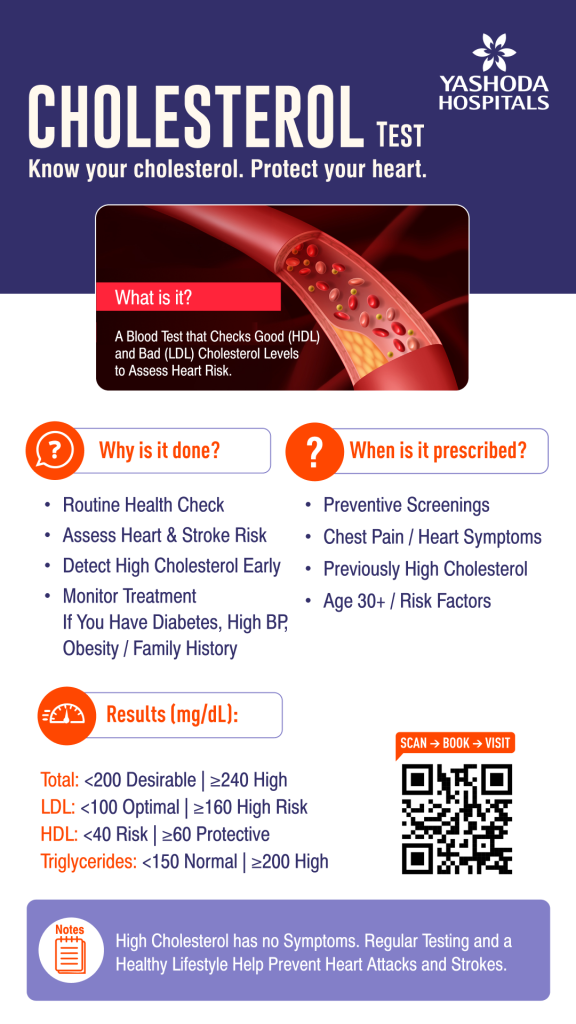
A cholesterol test is a blood test used to measure the levels of cholesterol and other fats in the blood. It commonly includes total cholesterol, low-density lipoprotein (LDL) cholesterol, high-density lipoprotein (HDL) cholesterol, and triglycerides. Cholesterol is a fatty substance that the body needs for certain functions, but abnormal levels can increase the risk of cardiovascular problems. High levels of LDL cholesterol and triglycerides, or low levels of HDL cholesterol, may contribute to the buildup of fatty deposits in the arteries.
What Are the Uses of a Cholesterol Test?
- To check cholesterol and triglyceride levels as part of routine health screening.
- To assess cardiovascular risk in people with one or more risk factors for heart disease.
- To identify lipid abnormalities that may require dietary, lifestyle, or medical management.
- To follow cholesterol levels in patients already diagnosed with high cholesterol.
- To assess how cholesterol levels change after starting treatment or making lifestyle modifications.
When Should You Get a Cholesterol Test?
- A patient may be advised to undergo testing during a routine health assessment.
- The test may be recommended when there is a family history of high cholesterol or premature heart disease.
- It may be suggested for people with conditions or risk factors such as diabetes, obesity, high blood pressure, or physical inactivity.
- Regular testing may be advised for patients taking medicines to manage high cholesterol.
- The test may also be recommended when previous lipid results were outside the expected range.
How to Prepare for a Cholesterol Test?
Preparation for a cholesterol test depends on the type of testing being performed. The patient should inform the doctor about all medicines, supplements, and health conditions. Some cholesterol tests can be performed without fasting, while fasting may be advised in certain situations, particularly when triglyceride levels need careful assessment. The doctor or laboratory will provide instructions about fasting, food, drinks, and medication before the test.
What is the procedure for a cholesterol test?
The cholesterol test involves collecting a small blood sample, usually from a vein in the arm. The healthcare professional first cleans the collection area with an antiseptic solution and then uses a sterile needle to draw the sample. The blood is collected in a suitable tube and sent to the laboratory for analysis. The sample may be tested for total cholesterol, LDL cholesterol, HDL cholesterol, triglycerides, and other lipid measurements as required. Blood collection usually takes only a few minutes.
Normal Range for Cholesterol Test
| Total Cholesterol Level | Interpretation |
| Less than 200 mg/dL | Desirable |
| 200–239 mg/dL | Borderline high |
| 240 mg/dL or higher | High |
Cholesterol reference ranges may vary slightly between laboratories and may be interpreted along with other lipid parameters and individual cardiovascular risk factors. Results should be interpreted using the reference range provided in the laboratory report.
What Can Affect Cholesterol Test Results?
- Food intake before testing can affect certain lipid measurements, particularly triglyceride levels.
- Fasting or non-fasting status may influence some results depending on the type of test performed.
- Certain medicines, including cholesterol-lowering medicines and some hormonal treatments, may affect lipid levels.
- Body weight, physical activity, diet, and alcohol consumption can influence cholesterol and triglyceride levels.
- Medical conditions such as diabetes, thyroid disorders, kidney disease, and liver disease may affect lipid measurements.
- Cholesterol results are interpreted based on factors such as age, overall health, medical history, cardiovascular risk factors, and the laboratory’s reference ranges.
What are the Different Types of Cholesterol Tests?
Total Cholesterol Test measures the overall amount of cholesterol in the blood and forms part of a broader assessment of lipid health.
LDL Cholesterol Test measures low-density lipoprotein cholesterol, which can contribute to the formation of fatty deposits in the arteries when levels are elevated.
HDL Cholesterol Test measures high-density lipoprotein cholesterol, which helps transport cholesterol from the bloodstream to the liver for processing.
Triglyceride Test measures triglycerides, a type of fat in the blood that can be associated with increased cardiovascular risk when levels are high.
Lipid Profile Test measures several types of blood lipids, commonly including total cholesterol, LDL cholesterol, HDL cholesterol, and triglycerides, to provide a more complete assessment of lipid levels.
Understanding of Cholesterol Test Results
- Cholesterol test results are interpreted by considering the individual lipid measurements together rather than looking at a single value alone.
- Higher-than-recommended LDL cholesterol or triglyceride levels may be associated with an increased risk of cardiovascular disease.
- HDL cholesterol levels are also considered when assessing the overall lipid profile and cardiovascular risk.
- Cholesterol test results should be interpreted by a qualified healthcare professional along with the patient’s medical history, cardiovascular risk factors, physical examination, and other test findings.
Side Effects of Cholesterol Test
The patient may experience mild pain or discomfort when the blood sample is collected.
Most side effects associated with cholesterol blood testing are mild and usually resolve on their own within a short period.
Minor bruising, tenderness, or slight swelling may occur at the needle insertion site.







 Appointment
 Second Opinion
 Live Chat
 Call
 More