


Recurrent Fever in Children: Causes, Red Flags & When to See a Doctor
1.What Is Recurrent Fever in Children?
2.Common Causes of Recurrent Fever
3.When Is Recurrent Fever Less Concerning?
4.Red Flags Parents Should Know
6.How Is Recurrent Fever Diagnosed?
7. How Is Recurrent Fever Treated?
8. Home Care and Fever Monitoring
9.Can Recurrent Fever Be Prevented?
Fever is one of the most common reasons parents take their children to a doctor. In most cases, an occasional fever is linked to a common infection and settles as the child recovers. However, recurrent fever in children can be concerning, especially when the fever keeps coming back without a clear reason.
Children, particularly those who attend school or daycare, may get several infections each year because they are frequently exposed to different viruses and bacteria. Most of these illnesses are mild and improve with appropriate care. But if fever occurs repeatedly, lasts longer than expected, or is accompanied by symptoms such as unusual tiredness, poor appetite, weight loss, rashes, swollen lymph nodes, or joint pain, it may need further evaluation by a paediatrician.
Understanding what causes recurrent fever in children, which symptoms are usually harmless, and which signs may require medical attention can help parents respond appropriately and seek timely care when needed.
What Is Recurrent Fever in Children?
Recurrent fever in children means that a child develops fever repeatedly, with periods of normal temperature in between. The episodes may happen because of separate infections, particularly in children who frequently come into contact with other children at school or daycare.
For example, a child may develop a fever during a viral infection, recover completely, and then develop another fever a few weeks later due to a different infection. This can happen occasionally and does not always indicate an underlying health problem.
However, if fever keeps returning without an obvious cause, follows a regular pattern, or occurs along with symptoms such as swollen lymph nodes, joint pain, unexplained weight loss, persistent tiredness, or poor appetite, it is important to consult a paediatrician. A medical evaluation can help identify the cause and determine whether any further tests or treatment are needed.
What Causes Recurrent Fever in Children?
There are several possible reasons why a child may develop a fever repeatedly. In many cases, recurrent fever is related to common infections. However, the cause can vary depending on the child’s age, symptoms, medical history, and how often the fever returns.
1. Common Viral Infections
Viral infections are among the most common causes of fever in children. Children may experience several viral illnesses, particularly when they attend school or daycare and are regularly exposed to other children. A viral infection may cause fever, cough, runny nose, sore throat, vomiting, or diarrhea. Having repeated viral infections does not necessarily mean that a child has a weak immune system.
2. Bacterial Infections
Bacterial infections can also cause fever in children. Common examples include ear infections, throat infections, pneumonia, and certain skin infections. If a child has repeated bacterial infections or does not improve as expected, a pediatrician may recommend an examination and appropriate tests to identify the underlying cause.
3. Urinary Tract Infections
A urinary tract infection (UTI) can cause fever in children and may sometimes occur without obvious urinary symptoms, especially in younger children. When a child has repeated or unexplained episodes of fever, a paediatrician may consider a urine test to check for a UTI, depending on the child’s symptoms and examination.
4. Periodic Fever Syndromes
Some children experience recurring fever episodes that follow a recognisable pattern. These conditions are known as periodic fever syndromes.
One example is PFAPA (Periodic Fever, Aphthous Stomatitis, Pharyngitis, and Adenitis), which may cause repeated episodes of fever along with symptoms such as mouth ulcers, sore throat, or swollen lymph nodes.
These conditions are less common than ordinary childhood infections, but a pediatrician may consider them when fever episodes repeatedly occur in a similar pattern.
5. Inflammatory or Other Medical Conditions
Less commonly, recurrent fever may be associated with inflammatory or autoimmune conditions and other underlying health problems.
These causes are uncommon, but further evaluation may be considered when fever is persistent or unexplained, particularly if the child also has poor growth, unexplained weight loss, prolonged tiredness, joint pain or swelling, persistent rashes, or swollen lymph nodes. The cause of recurrent fever cannot be determined from the fever alone. A paediatrician may consider the child’s complete medical history, symptoms, physical examination, and, when needed, appropriate diagnostic tests.
When Is Recurrent Fever Usually Less Concerning?
Repeated fever episodes are often related to common childhood infections, particularly in children who attend school or daycare. The child’s overall health and behaviour between episodes can help parents understand whether further medical evaluation is needed.
Recurrent fever may be less concerning when a child:
- Becomes active, alert, and comfortable after the fever settles
- Drinks fluids adequately and passes urine normally
- Recovers completely between illnesses
- Continues to grow and gain weight normally
- Has symptoms that fit a common infection, such as a cough, runny nose, or sore throat
- Returns to normal eating, playing, and sleeping after recovery
- Does not have persistent or unusual symptoms between fever episodes
A child’s overall condition is important. An alert child, drinking fluids, eating reasonably well, and behaving normally between episodes is generally less concerning than a child who remains unusually tired, weak, or unwell after the fever has settled.
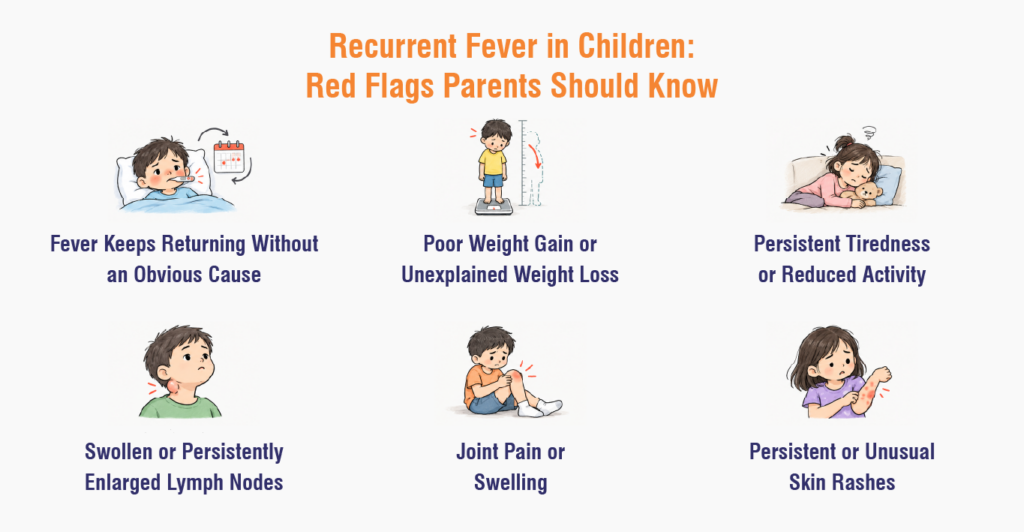
Recurrent Fever in Children: Red Flags Parents Should Know
Parents should consult a paediatrician if fever repeatedly returns without a clear explanation or is accompanied by other concerning symptoms.
- Fever that keeps returning without an obvious cause
- Fever that lasts longer than expected
- Poor weight gain or unexplained weight loss
- Persistent tiredness, weakness, or reduced activity
- Recurrent or unusually frequent infections
- Swollen or persistently enlarged lymph nodes
- Persistent abdominal pain
- Repeated vomiting or diarrhoea
- Joint pain, swelling, or difficulty moving
- Unexplained bone pain
- Persistent or unusual skin rashes
- Night sweats
- Poor appetite that continues after the illness
- Symptoms that do not completely resolve between fever episodes
These symptoms do not necessarily mean that a child has a serious illness. However, they indicate that medical evaluation may be appropriate to identify the cause of recurrent fever.
Is your child’s fever coming back repeatedly? Consult a paediatrician at Yashoda Hospitals for timely evaluation.
When Is Fever an Emergency in Children?
Some symptoms require urgent medical attention. Seek immediate medical care if a child with a fever develops:
- Difficulty breathing or rapid breathing
- Severe weakness or unusual sleepiness
- Difficulty waking or responding normally
- A seizure
- A stiff neck
- Signs of severe dehydration, such as very little or no urine
- Repeated vomiting and inability to drink or keep fluids down
- A purple, bruise-like, or non-blanching rash
- Severe or rapidly worsening symptoms
Parents should seek urgent medical attention if their child appears seriously unwell, even if the recorded temperature is not extremely high.
Fever in Babies
Fever needs particular attention in very young babies. A baby younger than 3 months with a temperature of 38°C (100.4°F) or higher should be assessed promptly by a healthcare professional. Parents should not wait for the fever to settle on its own in a young infant. Prompt medical assessment is especially important if the baby also has poor feeding, unusual sleepiness, breathing difficulty, reduced urine output, or other concerning symptoms.
How Is Recurrent Fever Diagnosed?
Diagnosing recurrent fever in children starts with understanding the child’s fever pattern, other symptoms, medical history, and overall health. A paediatrician will usually begin with a detailed discussion with the parents, followed by a physical examination.
What May the Paediatrician Ask?
Parents may be asked about:
- When did the fever first begin?
- How often does the fever occur?
- How long does each episode usually last?
- What is the highest temperature recorded?
- Does the child’s temperature return to normal between episodes?
- Does the child become completely active and well between fevers?
- Are there other symptoms, such as cough, rash, abdominal pain, joint pain, vomiting, or diarrhoea?
- Has the child had frequent or repeated infections?
- Is the child growing and gaining weight normally?
- Has there been recent travel or contact with someone who was unwell?
- What medicines have been given, and how did the child respond?
Parents can help by keeping a fever diary with temperature readings, dates, duration of fever, associated symptoms, and medicines given. This information can help the paediatrician identify whether the episodes follow a particular pattern.
What Tests May Be Needed?
The need for tests depends on the child’s symptoms and physical examination. When appropriate, a paediatrician may recommend:
- Blood tests to look for signs of infection or inflammation
- Urine tests when a urinary tract infection is suspected
- Imaging tests, such as an X-ray or ultrasound, when indicated by the child’s symptoms
- Other targeted tests when a specific infection, inflammatory condition, or periodic fever syndrome is suspected
Not every child with recurrent fever needs extensive testing. In many cases, the child’s history, fever pattern, physical examination, and overall health provide important information. Tests are usually selected based on the individual child’s symptoms rather than performed routinely.
If fever continues to recur or does not follow the usual pattern of a childhood infection, a paediatrician can determine whether further evaluation is needed.
Concerned about recurrent fever? Get expert paediatric care to identify the cause and plan appropriate treatment.
How Is Recurrent Fever Treated?
The treatment for recurrent fever in children depends on what is causing the fever. Since recurrent fever can occur due to common infections as well as less common conditions, treatment should be based on the child’s symptoms and medical evaluation.
Treatment for Common Viral Infections
Most viral infections improve on their own with supportive care. Parents can help their child by:
- Encouraging plenty of fluids to prevent dehydration
- Providing adequate rest and sleep
- Offering nutritious, age-appropriate meals as tolerated
- Monitoring the child’s temperature and overall condition
- Giving fever-reducing medicine when recommended by a healthcare professional and according to the child’s age and weight
The goal is generally to keep the child comfortable and well hydrated while the body recovers from the infection.
Treatment for Bacterial Infections
If a paediatrician identifies a bacterial infection, treatment will depend on the type and location of the infection. Antibiotics may be prescribed when medically appropriate, along with other supportive measures.
Parents should complete an antibiotic course as prescribed and should not start, stop, or reuse antibiotics without medical advice.
Treatment for Periodic Fever Syndromes
Children diagnosed with a periodic fever syndrome may require a different treatment approach. The paediatrician may recommend specialist evaluation and a treatment plan based on the specific condition, frequency of episodes, and associated symptoms.
What About Recurrent or Unexplained Fever?
When the cause of recurrent fever is not immediately clear, the paediatrician may first monitor the child’s symptoms and fever pattern or recommend targeted investigations. Treatment can then be tailored according to the findings.
Avoid giving antibiotics without medical advice. Many childhood fevers are caused by viruses, against which antibiotics do not work. Unnecessary antibiotic use can also contribute to antibiotic resistance and may cause side effects. If your child’s fever keeps returning, consult a paediatrician to identify the possible cause and determine the appropriate treatment.
What Can Parents Do at Home?
When a child has a recurrent fever, parents should look at the child’s overall condition rather than focusing only on the number shown on the thermometer. Keeping the child comfortable, well hydrated, and appropriately monitored can be helpful while they recover.
Keep Track of:
- Temperature and time: Record the temperature and when it was measured.
- Duration of fever: Note when each episode starts and when it settles.
- Other symptoms: Record symptoms such as cough, runny nose, sore throat, vomiting, diarrhea, rash, abdominal pain, or joint pain.
- Food and fluid intake: Keep track of whether the child is eating and drinking reasonably well.
- Urine output: Notice whether the child is passing urine regularly, as reduced urination can be a sign of dehydration.
- Medicines given: Record the name, dose, and time of any medicine given.
- Activity level: Note whether the child is alert, active, and comfortable or unusually tired and sleepy.
- Recovery between episodes: Pay attention to whether the child returns to their usual behavior, appetite, and activity after the fever settles.
Keep a Fever Diary
A fever diary can be particularly useful when fever episodes keep returning. Recording the date, temperature, duration, symptoms, medicines, and the child’s behaviour between episodes can help the pediatrician identify patterns and decide whether further evaluation is needed.
Parents should also encourage adequate fluids and rest and avoid giving antibiotics unless they have been prescribed by a healthcare professional.
If the child becomes unusually sleepy, has difficulty breathing, shows signs of dehydration, develops a seizure, or appears seriously unwell, seek medical attention promptly rather than relying on home monitoring.
Can Recurrent Fever Be Prevented?
Not every episode of childhood fever can be prevented. Children naturally come into contact with different viruses and bacteria, particularly when they attend school or daycare. However, parents can take simple steps to reduce the risk of many infections that can cause fever.
These include:
- Encouraging regular handwashing, especially before eating and after using the toilet
- Keeping your child’s vaccinations up to date
- Teaching good respiratory hygiene, such as covering the mouth and nose when coughing or sneezing
- Providing safe food and clean drinking water
- Ensuring adequate sleep and regular rest
- Offering a balanced, nutritious diet
- Avoiding close contact with people who have an active infection whenever possible
- Keeping frequently touched household surfaces clean when someone at home is unwell
Children who attend school or daycare may experience infections more frequently because of regular exposure to other children. This is common and does not necessarily mean that the child has a weak immune system.
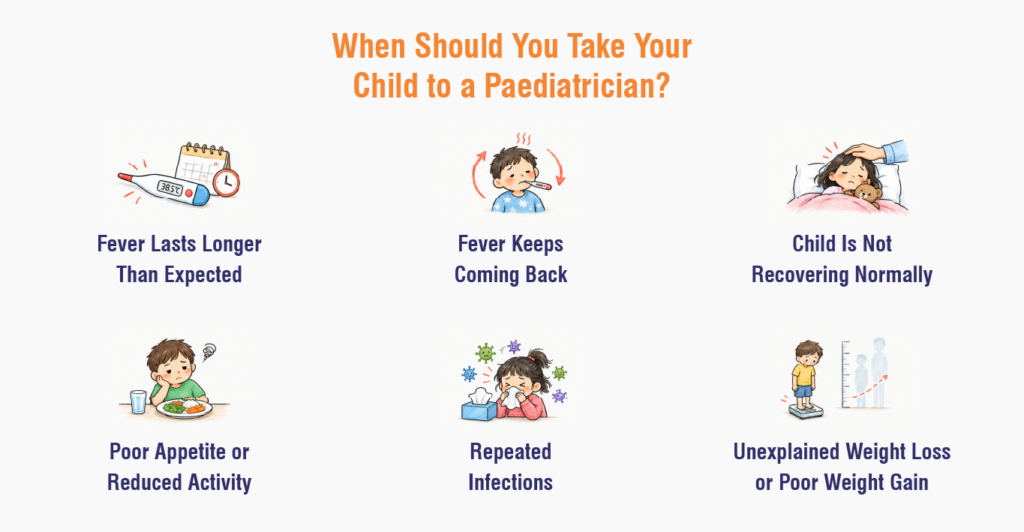
When Should You Take Your Child to a Pediatrician?
Consider consulting a pediatrician when:
Fever keeps coming back → especially when there is no obvious cause.
Fever lasts longer than expected → persistent fever should be assessed.
The child is not recovering normally → ongoing tiredness, poor appetite, or reduced activity deserves attention.
There are additional symptoms → such as weight loss, swollen lymph nodes, joint pain, persistent rash, or repeated infections.
You are worried about your child’s condition → parents should seek medical advice when something does not seem right, particularly in babies and young children.
Why Choose Yashoda Hospitals for Pediatric Care?
At Yashoda Hospitals, children can receive comprehensive medical evaluation and care from experienced paediatric specialists.
Depending on the child’s symptoms, the medical team can assess recurrent or persistent fever, identify possible causes and recommend appropriate investigations and treatment.
Early medical evaluation can help parents understand why fever keeps returning and whether further investigation is required.
If your child is experiencing recurrent or unexplained fever, consult a paediatrician for an appropriate evaluation rather than repeatedly treating the fever at home.
Don’t ignore persistent or recurring fever. Book a paediatric consultation at Yashoda Hospitals today.
FAQs
1. What is recurrent fever in children?
Recurrent fever means a child experiences repeated episodes of fever with periods of normal temperature in between. It can occur because of repeated infections or, less commonly, certain inflammatory or periodic fever conditions.
2. How often is fever normal in children?
Children can have several infections, particularly during early childhood or when attending school or daycare. The number of infections alone does not necessarily indicate a serious problem. A child’s recovery, growth, and symptoms between episodes are also important.
3. When should I worry about recurrent fever in my child?
Consult a paediatrician if fever repeatedly returns without an obvious cause, lasts longer than expected, or occurs with symptoms such as poor weight gain, persistent fatigue, swollen lymph nodes, joint pain, unusual rashes or recurrent infections.
4. Is recurrent fever a sign of weak immunity?
Not necessarily. Children commonly develop repeated infections because their immune systems are still developing and they are frequently exposed to new viruses. Persistent or unusual infections may require medical evaluation.
5. Can teething cause recurrent fever?
Teething may cause mild temperature changes, but a significant or persistent fever should not automatically be attributed to teething. If a child has a high or ongoing fever, consult a paediatrician to identify the cause.
6. Can recurrent fever be caused by a UTI?
Yes. Urinary tract infections can cause fever in children and may sometimes occur without obvious urinary symptoms. A paediatrician may recommend urine testing when a UTI is suspected.
7. How long is too long for a fever in a child?
The appropriate timeframe depends on the child’s age, temperature and associated symptoms. Fever that persists for several days, particularly around five days or longer, should be medically assessed.
8. When is fever dangerous for a baby?
A baby younger than 3 months with a temperature of 38°C (100.4°F) or higher needs prompt medical assessment. Seek urgent care sooner if the baby has breathing difficulty, poor feeding, unusual sleepiness, or other concerning symptoms.
9. Should I give antibiotics for recurrent fever?
No. Antibiotics treat certain bacterial infections but do not treat viral infections. They should only be given when prescribed or advised by a qualified healthcare professional.
10. Which doctor should I consult for recurrent fever in children?
A paediatrician is usually the appropriate first doctor to evaluate recurrent fever. Based on the child’s symptoms and test results, the paediatrician may recommend consultation with another specialist if necessary.











 Appointment
 Second Opinion
 Live Chat
 Call
 More