


Male Infertility: Causes, Tests and Sperm Health in Urban India
Infertility is often thought of as a women’s health issue, but male factors can contribute significantly to a couple’s difficulty in conceiving. Problems with sperm production, sperm movement, hormones, reproductive organs, or ejaculation can all affect male fertility.
In urban India, growing concerns about sperm health have also brought attention to lifestyle and environmental factors such as sedentary habits, obesity, smoking, alcohol consumption, heat exposure, and air pollution. These factors may affect sperm quality in some men, although fertility is influenced by several factors and not by urban living alone.
The good news is that many causes of male infertility can be identified through appropriate evaluation, and some are treatable.
What is male infertility?
Male infertility refers to a man’s inability to contribute to conception despite regular unprotected sexual intercourse. A couple is generally evaluated for infertility when pregnancy has not occurred after 12 months of regular unprotected intercourse. However, earlier assessment may be appropriate when there are known reproductive health concerns, previous testicular problems, sexual or ejaculation difficulties, or other risk factors.
Male fertility depends on several factors, including:
- Adequate sperm production
- Healthy sperm movement
- Normal sperm structure
- Proper hormone function
- Normal testicular function
- Open reproductive pathways
- Normal ejaculation and sexual function
Male and female factors can also occur together. Therefore, evaluating both partners is important when a couple is experiencing difficulty conceiving.
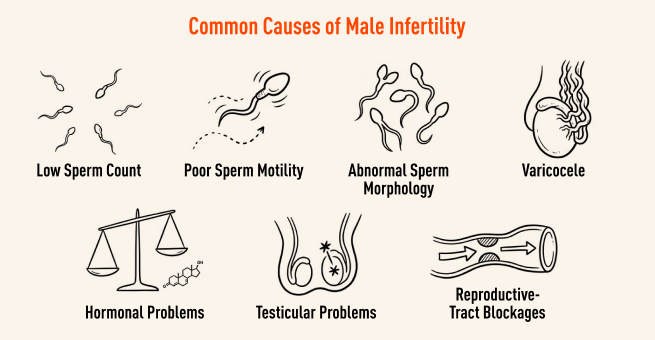
Common Causes of Male Infertility
Male infertility can have many causes. Sometimes several factors occur together, while in some men no single cause can be identified.
1. Low sperm count
Low sperm count, also called oligospermia, means that the concentration or total number of sperm in semen is lower than expected. A lower sperm count can reduce the chances of sperm reaching and fertilising an egg. However, sperm count is only one part of the fertility assessment. Sperm motility, morphology and other factors also matter.
2. Poor sperm motility
Sperm motility refers to how well sperm move. Progressive motility is particularly important because sperm need to move forward through the female reproductive tract to reach the egg. Reduced sperm motility may therefore make conception more difficult.
3. Abnormal sperm morphology
Sperm morphology refers to the size and shape of sperm. A semen analysis evaluates the percentage of sperm with a normal structure. Abnormal morphology does not automatically mean that a man is infertile, but it may be considered along with sperm count, motility, and the couple’s overall fertility history.
4. Varicocele
A varicocele is an enlargement of the veins surrounding the testicle. It is relatively common and may affect testicular function and sperm production in some men. Varicocele can sometimes be detected during a physical examination and may be further assessed using scrotal ultrasound when required.
5. Hormonal problems
Sperm production is controlled by a complex interaction between the brain, pituitary gland and testes. Hormonal disorders affecting testosterone, follicle-stimulating hormone (FSH), luteinising hormone (LH) or other reproductive hormones may interfere with sperm production.
6. Testicular problems
Conditions affecting the testicles can sometimes reduce sperm production. These may include previous testicular injury, certain infections, undescended testes or other abnormalities. A history of testicular surgery or treatment for certain cancers can also affect fertility.
7. Blockages in the reproductive tract
Even when sperm production is normal, a blockage can prevent sperm from entering the semen. Previous infections, surgery, or congenital abnormalities can sometimes cause reproductive-tract obstruction.
8. Infections
Certain infections affecting the reproductive tract can interfere with sperm production or transport. Inflammation may also affect sperm function. A doctor may recommend appropriate testing when an infection is suspected.
9. Medications and anabolic steroids
Some medicines can affect reproductive hormones or sperm production. Anabolic steroids are particularly important because they can suppress the body’s natural hormone signals responsible for sperm production.
Men taking regular medication or supplements should discuss them with their doctor if they are planning a pregnancy. Medicines should not be stopped without medical advice.
10. Sexual and ejaculation problems
Male infertility is not always caused by abnormal sperm. Erectile dysfunction, premature ejaculation, delayed ejaculation, retrograde ejaculation and other sexual problems can make conception difficult even when sperm production is normal.
Concerned About Low Sperm Count or Poor Sperm Quality?
Sperm Health in Urban India: What Factors Matter?
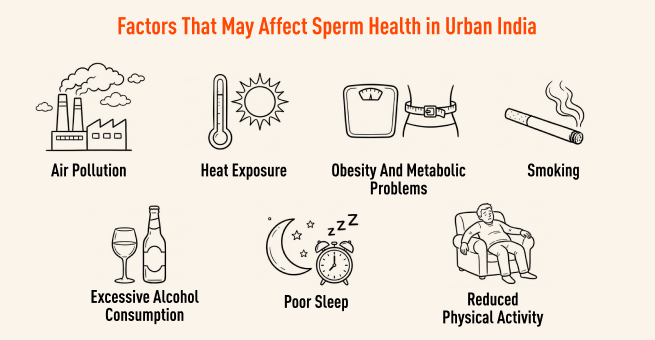
Sperm health is influenced by multiple factors rather than a single cause. Urban lifestyles may expose some men to a combination of factors that can potentially affect reproductive health, including:
- Long periods of sitting
- Reduced physical activity
- Obesity and metabolic problems
- Smoking
- Excessive alcohol consumption
- Poor sleep
- Chronic stress
- Heat exposure
- Air pollution
- Exposure to certain environmental chemicals
Research has reported associations between environmental pollution and changes in semen parameters. However, this does not mean that living in a city automatically causes infertility. The relationship between environmental exposure and male fertility is complex, and researchers are continuing to study the extent to which individual exposures contribute to reproductive problems.
Air Pollution and Sperm Health
Air pollution has increasingly been studied as a potential factor affecting male reproductive health. Pollutants may contribute to oxidative stress and inflammation, which are mechanisms that researchers believe could affect sperm production and function.
Studies have reported associations between exposure to air pollutants and changes in sperm concentration, motility, morphology, and sperm DNA integrity. However, individual risk varies, and air pollution is only one potential contributor to male infertility.
Heat Exposure and Sperm Production
The testes normally function at a temperature slightly lower than core body temperature. Repeated or prolonged exposure to excessive heat may interfere with sperm production in some men. Occupational heat exposure, prolonged exposure to high temperatures, and certain workplace environments may therefore be relevant when evaluating unexplained changes in semen quality.
Sperm production also takes time. Therefore, changes in lifestyle or environmental exposure may not be reflected immediately in a semen analysis.
Can obesity affect male fertility?
Excess body weight can affect male reproductive health through hormonal, metabolic, and inflammatory pathways.
Obesity has been associated with changes in testosterone levels and semen parameters in some studies. It may also increase the risk of conditions such as diabetes and metabolic syndrome, which can further affect reproductive health. Maintaining a healthy weight through regular physical activity and a balanced diet may support overall reproductive health.
Smoking and Sperm Quality
Smoking can expose the body to substances that may increase oxidative stress. Research has associated smoking with changes in several semen parameters, including sperm concentration, motility and morphology. Men planning a pregnancy can benefit from stopping smoking because it supports overall health as well as reproductive health.
Alcohol and Male Fertility
Heavy alcohol consumption may interfere with hormone balance, testicular function and sperm production. Reducing excessive alcohol intake is therefore an important part of maintaining reproductive health, particularly for men who are trying to conceive.
Signs and Symptoms of Male Infertility
Male infertility often does not cause obvious symptoms. A man may have normal sexual function and no noticeable symptoms despite having abnormal sperm parameters. Possible clues may include:
- Difficulty conceiving with a partner
- Problems with erection
- Problems with ejaculation
- Reduced sexual desire
- Testicular pain or swelling
- A lump or enlarged veins around the testicle
- Previous testicular injury or surgery
- History of reproductive-tract infection
Because many men have no symptoms, testing can be important when pregnancy does not occur as expected.
Tests for Male Infertility
A fertility evaluation usually begins with a detailed medical and reproductive history, physical examination, and semen analysis. Additional tests are selected according to the individual’s symptoms and initial findings.
1. Semen analysis
Semen analysis is one of the most important initial tests for evaluating male fertility.It can assess:
- Semen volume
- Sperm concentration
- Total sperm number
- Sperm motility
- Progressive motility
- Sperm morphology
- Other semen characteristics
An abnormal result does not necessarily mean permanent infertility. Semen parameters can vary, and a doctor may recommend repeat testing depending on the results.
2. Hormone tests
Blood tests may be recommended when a hormonal cause is suspected. Depending on the clinical situation, testing may include:
- FSH
- LH
- Testosterone
- Prolactin
- Other hormones when indicated
These tests can help determine whether hormonal problems may be affecting sperm production.
3. Physical examination
A urologist or male fertility specialist may examine the testicles, epididymis, and surrounding structures. The examination can help identify conditions such as varicocele, testicular abnormalities or other reproductive problems.
4. Scrotal ultrasound
A scrotal ultrasound may be recommended when the doctor needs to evaluate the testicles or investigate a suspected varicocele or other structural abnormality.
5. Sperm DNA fragmentation testing
Sperm DNA fragmentation testing evaluates damage to genetic material within sperm. It is not routinely required for every man with infertility. A fertility specialist may consider it in selected situations based on the couple’s medical history and previous fertility evaluation.
6. Genetic testing
Genetic testing may be considered in men with very low or absent sperm counts or when a genetic cause of infertility is suspected. The type of test depends on the clinical findings.
Need Male Infertility Tests?
How to Support Sperm Health
Improving sperm health depends on the underlying cause. Lifestyle changes may help address modifiable factors, but they cannot correct every cause of male infertility. Men trying to improve their reproductive health can consider:
- Maintaining a healthy weight
- Exercising regularly
- Eating a balanced diet
- Stopping smoking
- Limiting excessive alcohol intake
- Getting adequate sleep
- Managing diabetes and other metabolic conditions
- Avoiding unnecessary anabolic steroids
- Reducing avoidable heat exposure
- Discussing potentially fertility-affecting medicines with a doctor
- Seeking medical evaluation rather than relying only on supplements
A healthy lifestyle supports general health and may also support reproductive health. However, supplements should not be considered a substitute for diagnosis. Men with persistent fertility problems should undergo an appropriate medical evaluation.
Male Infertility Treatment
Treatment depends on the cause. Depending on the diagnosis, treatment may include:
Lifestyle changes
Weight management, exercise, smoking cessation, reduced alcohol intake and management of underlying health conditions may be recommended.
Medical treatment
Hormonal disorders, infections and certain other medical conditions may require specific treatment.
Varicocele treatment
Some men with clinically significant varicocele and associated fertility problems may be considered for treatment after evaluation by a specialist.
Surgical treatment
Surgery may be appropriate for certain reproductive-tract blockages or other structural abnormalities.
Assisted reproductive techniques
Depending on sperm quality and the fertility status of both partners, assisted reproductive techniques such as intrauterine insemination (IUI), in vitro fertilisation (IVF) or intracytoplasmic sperm injection (ICSI) may be considered. The appropriate approach depends on the underlying cause, duration of infertility, female partner’s fertility status and other individual factors.
When to See a Male Fertility Specialist
A couple should generally seek an infertility evaluation when pregnancy has not occurred after 12 months of regular unprotected intercourse. Earlier evaluation may be appropriate when there is:
- A history of testicular problems
- Previous testicular or pelvic surgery
- Significant varicocele
- Very low or absent sperm count
- Sexual or ejaculation problems
- Previous chemotherapy or radiation treatment
- Suspected hormonal problems
- A known reproductive condition
Both partners may need evaluation because infertility can involve male factors, female factors, or a combination of both.
Conclusion
Male infertility can be linked to problems with sperm production, sperm quality, hormones, testicular function, reproductive-tract blockages, or sexual function. Lifestyle and environmental factors such as obesity, smoking, excessive alcohol use, heat exposure, and air pollution may also influence sperm health in some men.
Because fertility is influenced by multiple factors, identifying the underlying cause is important. A semen analysis is often one of the first steps in evaluating male fertility, while hormone tests, ultrasound, genetic testing, or other investigations may be recommended based on individual findings.
If you and your partner are having difficulty conceiving, consulting a urologist, andrologist, or male infertility specialist can help identify potential causes and guide appropriate treatment.
Timely evaluation can help detect treatable fertility problems and provide a clearer path toward achieving pregnancy.
Planning a Pregnancy but Facing Fertility Challenges? Book a consultation with a male infertility specialist at Yashoda Hospitals to explore suitable evaluation and treatment options.
About Author

Dr. Nand Kumar Madhekar
MS(General Surgery), MCh (Genitourinary Surgery)Sr. Consultant Urologist, Andrologist, Robotic & Renal Transplant Surgeon
FAQs
1. What is the most common cause of male infertility?
Male infertility can have many causes, including abnormal sperm production, varicocele, hormonal disorders, reproductive-tract blockages, infections, lifestyle factors, and certain medical conditions. Sometimes no single cause is identified.
2. Does low sperm count mean a man is infertile?
Not necessarily. Low sperm count can reduce the chance of conception, but fertility also depends on sperm motility, morphology, sexual function, and the fertility of both partners.
3. Which test checks sperm health?
A semen analysis is usually the initial test used to evaluate sperm concentration, total sperm number, motility, and morphology.
4. Can sperm count increase naturally?
Sperm health may improve when modifiable factors such as smoking, excessive alcohol consumption, obesity, poor lifestyle habits or excessive heat exposure are addressed. However, improvement depends on the underlying cause.
5. Does air pollution affect male fertility?
Research has found associations between air-pollution exposure and several semen parameters, but the relationship is complex. Air pollution is considered one potential environmental factor rather than the sole cause of male infertility.
6. Does heat reduce sperm count?
Prolonged or repeated exposure to excessive heat may affect sperm production in some men. The effect depends on the type, intensity, and duration of exposure.
7. Can varicocele cause male infertility?
Varicocele can affect testicular function and sperm production in some men. A specialist can determine whether treatment is appropriate based on the examination and fertility evaluation.
8. How long should a couple try before seeing a doctor?
A fertility evaluation is generally recommended after 12 months of regular unprotected intercourse without pregnancy. Earlier evaluation may be appropriate when known fertility risk factors are present.
9. Can smoking affect sperm quality?
Yes. Smoking has been associated with changes in sperm concentration, motility, and morphology and can contribute to oxidative stress.
10. Which doctor treats male infertility?
A urologist, andrologist, or male infertility specialist can evaluate male reproductive health, identify possible causes, and recommend appropriate treatment.















 Appointment
 Second Opinion
 Live Chat
 Call
 More